Riding the Cryptographic Wave: Embracing Post-Quantum Security in 2026
Adapting to the Post-Quantum Era with Hybrid Solutions for Secure AI Collaboration
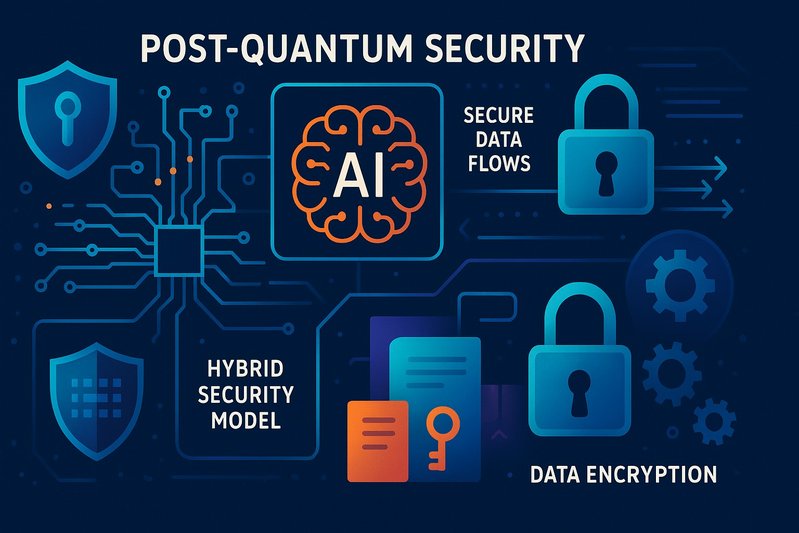
2026 presents an intriguing challenge for securing AI-enabled collaborative workspaces. As quantum computing looms on the horizon with the potential to crack existing encryption systems, the need for post-quantum cryptography has become increasingly urgent. This article explores how post-quantum cryptography, when integrated with hybrid security solutions, can safeguard AI collaboration spaces, preparing them for the future.
Securing Data in Transit: TLS 1.3 and Beyond
The foundation of secure AI collaboration lies in encrypted data transit layers. Transport Layer Security (TLS) 1.3, coupled with QUIC and HTTP/3, offers a strong base with forward secrecy and improved performance for online applications. However, to fend off threats from potential quantum attacks, a hybrid approach is crucial. This involves deploying hybrid Key Encapsulation Mechanisms (KEM) in TLS, which integrates traditional and quantum-resistant cryptography, ensuring robust defenses against “harvest-now, decrypt-later” attacks. Although this transitional method maintains current system performance, it sets the stage for future implementations where PQ-only algorithms can be fully utilized once standardized and adopted.
Application Layer Encryption: Ensuring Integrity and Confidentiality
End-to-end encryption at the application layer is essential to decouple data confidentiality from server trust, thus enabling secure file sharing and messaging. The Messaging Layer Security (MLS) protocol is ideal for this environment, providing forward secrecy and post-compromise security. MLS facilitates dynamic group communication crucial for AI collaboration, where group membership can change frequently. For file encryption, the use of Hybrid Public Key Encryption (HPKE) with Advanced Encryption Standard (AES) ensures that data can be securely shared among multiple recipients without exposing plaintext, leveraging either AES-GCM or ChaCha20-Poly1305 depending on device capabilities. These methods not only enhance security but also enable seamless user experiences.
Confidential Computing: Data in Use Protection
Confidential computing plays a pivotal role in protecting data while it’s being processed. By encapsulating operations within Trusted Execution Environments (TEEs), like AWS Nitro Enclaves and Intel’s Software Guard Extensions (SGX), it ensures data remains encrypted and inaccessible to unauthorized entities during processing. The integration of remote attestation further strengthens this layer by validating workloads before decrypting data, thereby restricting access based on verified execution environments.
Advanced Cryptographic Techniques: Preparing for the Quantum Leap
Advanced cryptographic solutions provide the flexibility required to manage emerging data security challenges. Proxy Re-Encryption (PRE) enables selective re-sharing of encrypted data without exposing plaintext, while Searchable/Structured Encryption (SSE) allows encrypted querying of data. Though complex, these techniques can be valuable tools for secure AI operations. Attribute-Based Encryption (ABE) and Fully Homomorphic Encryption (FHE), though not fully viable for real-time applications due to their computational demands, offer promising potential for specific use cases in data science and AI.
Post-Quantum Readiness: Navigating the Transition
Recognizing the imminent threat of quantum computing, the industry is gearing up for a transition to post-quantum cryptographic algorithms. Prioritizing hybrid KEM implementations in TLS and updating code-signing practices to accommodate modular lattice-based signatures, such as ML-DSA, are crucial first steps. These measures ensure a resilient security posture capable of adapting to new threats as they materialize while maintaining compliance with established cryptographic standards.
Conclusion: A Secure, Collaborative Future
As AI continues to redefine how we work and collaborate, implementing post-quantum cryptography across collaborative workspaces is not just desirable but essential. By combining traditional encryption with innovative post-quantum solutions, organizations can protect their data against future quantum threats, ensuring secure collaboration. This hybrid approach should become the standard for 2026, balancing the need for robust security, compliance with international standards, and operational efficiency in AI-driven environments.
Through this strategic shift, organizations will not only safeguard their intellectual assets but also foster a culture of trust and innovation, essential components for thriving in the digital age.