Optimizing Rendering and Asset Pipelines in Bevy 0.18
Enhance Visuals and Efficiency with Polished Pipeline Management
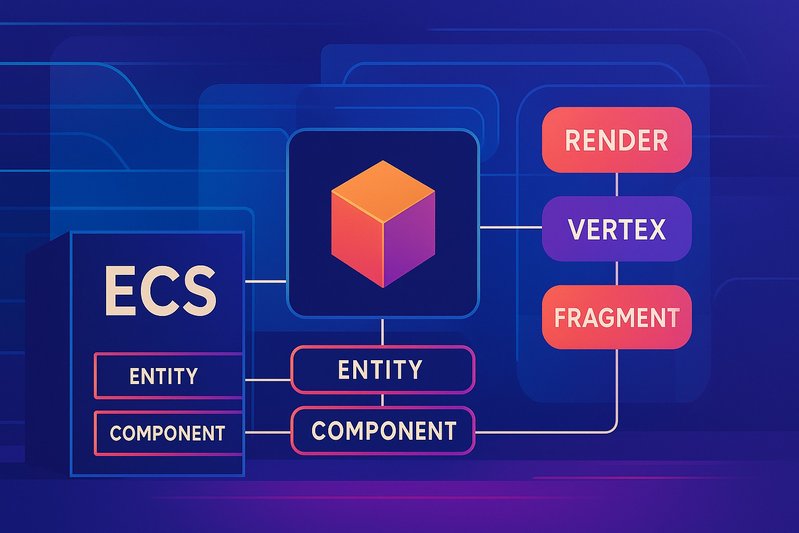
As game development evolves, Bevy 0.18 stands out by offering robust tools for rendering and asset management pipelines. Its architecture is built around the Entity Component System (ECS), a modern renderer using wgpu, and a strictly typed asset system. This feature set is tailored for developers looking to maximize visual fidelity and performance in their projects.
Bevy’s design goals center around flexibility and efficiency, which is evident in its data-oriented ECS, progressive rendering phases, and a comprehensive asset pipeline. Let’s explore how developers can leverage these systems to create optimized and visually stunning games.
Architecture Patterns for Production
ECS Modeling in Bevy 0.18
Bevy employs an archetype-based ECS designed for high-throughput iteration with components by default living in table storage, which enhances cache-friendly iteration. Projects often divide numeric data frequently used each frame into compact components stored in tables, while flags or seldom-used mode markers utilize sparse-set storage to avoid unnecessary memory allocation.
Bevy’s SystemParam framework supports efficient data access with resources (Res/ResMut) and entity data queries. It promotes the use of small, focused systems that access only the necessary data, avoiding persistent change-tracking costs inherent in traditional ECS models. For transient notifications, the event system provides an optimal way to handle interactions or state changes without causing system overhead.
Scheduling and System Ordering
To manage complex application logic, Bevy’s scheduler organizes systems into explicit schedules like Update and FixedUpdate. This structure allows parallel execution of systems as long as their data access does not conflict. Through the application of SystemSets, developers define partial orderings within domains such as input and gameplay, enhancing both flexibility and determinism in system execution.
Balancing Update and FixedUpdate lets developers separate stable simulation from variable rendering tasks. FixedUpdate provides a deterministic tick rate, critical for lockstep simulations like physics or multiplayer networking. Leveraging state hooks, teams can manage game flow with precision, spawning or dismantling level content at precise intervals.
Advanced Rendering Techniques
Rendering Pipeline Design
Bevy’s renderer decomposes tasks into phases: Extract, Prepare, and Queue. Extract gathers necessary ECS data, Prepare readies GPU resources, and Queue handles the draw calls by batching and submitting them. Utilizing bevy_pbr’s Material trait and AsBindGroup helps maintain organized shader resources, reducing bind group switches and pipeline churn.
To optimize draw-call reductions, sprite atlases in 2D and instancing in 3D are crucial. Bevy prioritizes minimizing pipeline specializations with techniques like front-to-back sorting for opaque passes to cut overdraw. Shaders written in WGSL benefit from wgpu’s validation through naga, ensuring layout stability and predictability across development and production builds.
Asset Pipeline Enhancements
Managing Asset Flows
The AssetServer in Bevy 0.18 enables dynamic asset loading, making it indispensable for rapid development phase hot-reloading. Production builds, however, may toggle hot-reload functionality off for performance reasons. Properly designed loading flows transition game states efficiently, often leveraging “Loading” states to initialize assets before gameplay begins.
For handling large or complex 3D data, the glTF 2.0 format is fully supported, allowing seamless integration of scenes and animations. Custom AssetLoaders extend this capability to proprietary formats, optimizing loading and streaming large assets by chunking scenes based on camera position or gameplay needs.
Conclusion: A Unified Path to Performance and Flexibility
Bevy 0.18 provides game developers with the infrastructure needed to efficiently manage rendering and asset pipelines. By exploiting these tools, developers can construct systems that not only meet performance benchmarks but also enhance visual quality. Key best practices include careful ECS modeling for efficient data access, scheduled rendering tasks to match simulation needs, and leveraging the asset pipeline for complex asset management.
Optimizing these features ensures games are not only ready for diverse platforms but also maintain a responsive and visually appealing user experience. With continuous enhancements in Bevy, embracing these architectural patterns and pipeline strategies will enable developers to push the boundaries of what’s possible in real-time interactive applications.