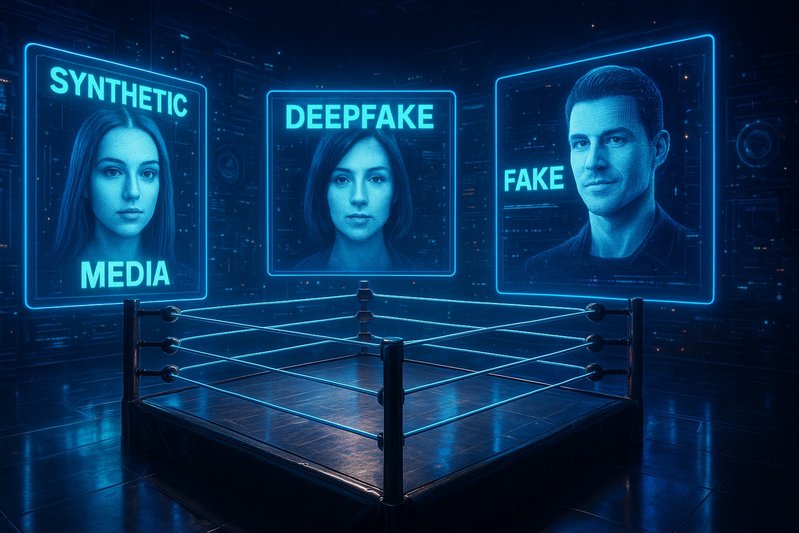
NIL Economics in Wrestling Shift as Synthetic Media Reshapes Brand Value
A revenue, risk, and adoption blueprint for promotions, athletes, and sponsors in the deepfake era
Allegations of AI‑generated videos depicting WWE talent in early 2026 jolted the wrestling business into a new reality: the most valuable asset in sports entertainment—persona—can now be cloned, localized, and monetized at scale by anyone with a model and a prompt. Whether or not a definitive public record emerges, the event crystallized a market truth. Synthetic media is no longer a side show; it’s an economic, legal, and governance test that will decide whose NIL assets appreciate and whose erode.
The stakes are immediate. Sponsors and platforms are tightening manipulated‑media policies, while policymakers race to harmonize rights across jurisdictions. Promotions and performers must reprice their name, image, and likeness (NIL) under conditions where authenticity, consent, and provenance are strategic differentiators.
This article lays out a blueprint for the business of NIL in wrestling as synthetic media goes mainstream. It shows how the value chain is shifting; how to quantify—and constrain—brand‑safety risk; where governance investments pay back; which consent‑based product lines make sense; how to structure rate cards and roster‑wide licensing; which KPIs matter to executives; and what a non‑cannibalizing adoption roadmap looks like.
How synthetic media rewires the NIL value chain
Wrestling’s economy has long revolved around controlled persona—on‑screen performances captured and owned by the promotion, plus licensed uses negotiated with talent. Synthetic media alters every step of that chain.
- From scarcity to replicability: A star’s face and voice are now reproducible inputs. That collapses distribution barriers, amplifies misuse risk, and creates new authorized SKUs that didn’t exist before—archival restorations, localized promos, and interactive experiences.
- From one‑off grants to purpose‑bound consent: Traditional contracts often permit exploitation “in all media now known or hereafter devised,” but don’t expressly address digital doubles, voice cloning, training on past recordings, or provenance obligations. The new baseline is opt‑in, purpose‑limited consent for any replica, with defined durations and territorial scope, plus kill‑switches if outputs damage reputation.
- From opaque to provable authenticity: Provenance moves from nice‑to‑have to economic necessity. Embedding cryptographically verifiable Content Credentials through the C2PA standard allows publishers to sign capture/edit histories and assert identity, giving platforms and audiences a signal to trust official outputs. Invisible watermarking can complement provenance but is less reliable under transformations, so it supports rather than substitutes for signed credentials.
- From ad hoc enforcement to programmatic governance: Platforms including YouTube, Meta, X, and TikTok now run manipulated‑media policies and dedicated complaint flows for simulated face/voice. Enforcement quality varies; success depends on aligning notices with the strongest legal lever available—copyright takedowns for WWE‑owned footage; right‑of‑publicity and false‑endorsement for persona misuse; privacy or intimate‑image remedies for pornographic deepfakes—and on building trusted‑flagger pathways.
Synthetic media creates an upside as well. Consent‑based product lines can expand capacity and reach without overextending talent or diluting the live product—if scoped and priced with guardrails.
Table: Synthetic NIL product lines and guardrails
| Product line | Consent granularity | Baseline comp model | Primary risk notes |
|---|---|---|---|
| Archival restoration/enhancement | Project‑specific; no training reuse | Session fee + residuals per distribution | Misattributed edits if provenance absent; reputational risk from edits |
| Localization (dubs, lipsync) | Language/territory, time‑limited | Per‑language fee + revenue share on localized channels | Sponsor confusion across markets; disclosure under EU/UK rules |
| Interactive promos (choose‑your‑path, fan shout‑outs) | Format‑specific; no off‑platform reuse | Per‑experience fee + in‑app RevShare | Overexposure; need clear labeling to avoid implied endorsements |
| Crowd fills/stunt continuity | Scene‑bounded, non‑dialog | Session fee only | Scope creep into performance replacement without approvals |
| Training/licensing of digital double | Model purpose/version, scope, duration | Upfront license + usage residuals; MFN for top talent | Overbroad training reuse; data protection in EU/UK markets |
Specific metrics on revenue lift are unavailable, but the durability of these categories will turn on consent, price discovery, and provable authenticity.
Brand‑safety math: quantifying risk and restoring sponsor confidence
Brand‑safety risk in wrestling now spans three layers: legal exposure, platform dynamics, and advertiser perception. The legal toolbox is available today, but outcomes—and speed—vary.
- Legal levers that move quickly: Copyright takedowns remove infringing uploads when WWE‑owned audio‑visual elements are used. False‑endorsement claims under the Lanham Act help when synthetic videos sell products or harvest payments by implying affiliation. State publicity rights, notably in California and New York, protect persona against unauthorized commercial exploitation, while New York’s civil remedy for sexually explicit deepfakes and Tennessee’s ELVIS Act broaden specific protections against AI impersonation of voice and likeness. Section 230’s intellectual‑property exception, and a circuit split on whether it applies to state publicity claims, create venue leverage that can pressure platforms when misuse is egregious.
- Cross‑border sensitivity: In the EU, the AI Act mandates transparency for deepfakes, and the GDPR’s special‑category regime for biometric data demands explicit consent for collection or use tied to unique identification. In the UK, the passing‑off doctrine addresses unauthorized endorsements, while the Online Safety Act elevates platform duties on illegal and harmful content. These layers reinforce the need for consent‑first licensing, minimization of training data, and standardized provenance for official content.
- Platform policy alignment: YouTube requires disclosure of realistic synthetic content and offers a privacy complaint pathway for simulated face/voice; Meta labels AI‑generated content more broadly; X can label, limit reach, or remove deceptive synthetic media; TikTok mandates labeling, restricts depictions of private individuals or minors, and bars harmful misrepresentations. Trusted‑flagger status and consistent notice templates improve time‑to‑removal and reduce recidivism.
Quantification is nascent, but the cost stack is clear. “Specific metrics unavailable,” yet executives can model risk along these dimensions:
- Incident costs: detection labor, legal review, takedown operations, PR response, and victim support for affected talent.
- Revenue leakage: diverted views and subscriptions to impersonator channels; algorithmic penalties on official channels due to mistaken strikes; sponsor make‑goods triggered by adjacency to harmful content.
- Brand equity impact: sponsor hesitancy; roster morale and retention risk; community trust erosion.
Confidence rebounds when audiences and sponsors can tell what’s official at a glance—and when violations disappear fast. That’s a governance investment problem, not just a legal one.
Table: Governance investments and payback mechanisms
| Investment | Primary payoff | Secondary benefits |
|---|---|---|
| C2PA Content Credentials on all official media | Reduced confusion; faster platform enforcement | Higher ad/sponsor comfort; reusable evidence logs |
| Standardized AI consent clauses (opt‑in, purpose‑bound, kill‑switch) | Fewer disputes; clearer rate cards | Better talent relations; cross‑border compliance readiness |
| Central registry of authorized replicas (linked to provenance) | Platform gating; proactive blocking | Streamlined licensing for partners |
| Trusted‑flagger and MOUs with platforms | Faster takedowns; lower recidivism | Predictable incident SLAs for sponsors |
| Vendor code of conduct (no‑train, logs, security) | Reduced data leakage and liability | Easier audits; litigation posture |
Pricing the authorized future: rate cards, revenue sharing, and roster‑wide governance
If synthetic media is inevitable, the right question is price, not whether. Rate cards must translate emerging labor standards into wrestling’s economics.
flowchart TD;
 A[Rate Card Structure] -->|creates| B[Digital Replica Creation Fee];
 A -->|licenses| C[Licensing Fee];
 A -->|usage| D[Usage Fee];
 B --> E[Session Fee];
 C --> F[Upfront Scope-Bound Fee];
 D --> G[Per-Use Residuals];
 D --> H[Revenue Shares];
 I[Consent Binding] --> J[Purpose Specified];
 I --> K[Scope Defined];
 I --> L[Time Limited];
 J --> M["Types: Archival, Localization"];
 K --> N[Include Dates and Territories];
 K --> O[Bar Training Reuse];
This flowchart illustrates the structure and components of rate cards for synthetic media pricing, defining fees for digital replica creation, licensing, and usage while also outlining consent binding aspects that govern the purpose, scope, and duration of such replicas.
- Structure rate cards like a menu, not a blanket license. Separate fees for creation of a digital replica (session fee), licensing of the replica (upfront scope‑bound fee), and usage (per‑use residuals or revenue shares). Require new consent and compensation for material scope changes—new territories, formats, or model versions.
- Bind consent to purpose, scope, and time. Approvals should specify whether the replica is for archival, localization, promos, or crowd fills; include dates and territories; and bar training reuse unless separately authorized.
- Bake in kill‑switches and reputational safeguards. Talent should have a path to suspend or revoke uses that cause harm, paired with pre‑release review where feasible. Promotions should commit to rapid takedowns and public clarifications when unauthorized deepfakes spike.
- Own authenticity. All official synthetic outputs must ship with provenance. Labeling and signed credentials protect the live product and reassure fans and sponsors that synthetic uses are artist‑approved and limited.
Group licensing can simplify the market. An opt‑in, roster‑wide licensing program for digital replicas, administered by the promotion or an affiliated entity, standardizes terms, pricing, and enforcement. Athletes keep dashboard control to toggle consent by use case, set sunset dates, and track payments. Promotions benefit from lower transaction costs and stronger negotiating position with platforms and vendors; talent gains transparency and bargaining power.
Operational governance makes it real:
- Registries and gating: Maintain a cryptographically verifiable registry of talent and approved replicas tied to Content Credentials. Share registries with platforms and major partners to help preempt unauthorized uploads.
- Vendor standards: Prohibit training on performer recordings without explicit, compensated opt‑in; require provenance embedding on all official outputs; mandate secure operations and detailed logging of model versions, prompts, and dataset lineage; impose liquidated damages for breaches.
- Notice choreography: Sequence the strongest notice types—copyright takedowns when WWE‑owned footage appears; false‑endorsement/publicity notices for persona misappropriation; manipulated‑media or privacy complaints for non‑copyright scenarios—then escalate via trusted‑flagger channels.
KPIs that matter—and an executive roadmap that avoids cannibalization
Measure what moves trust and revenue. Executives should track:
- Time‑to‑removal: Median hours from detection to platform removal across policy types.
- Recidivism rate: Percentage of repeat uploads within 30 days for the same asset or account cluster.
- Provenance penetration: Share of official outputs published with Content Credentials.
- Sponsor sentiment: Quarterly survey scores on confidence in manipulated‑media governance; number of sponsor content holds or make‑goods linked to synthetic media incidents.
- Fan trust signals: Ratio of views on official channels versus impersonator channels for identical narratives; complaint volume about authenticity.
- Licensing velocity: Time from request to approval for authorized synthetic projects; number of approved projects by category without live‑event cannibalization indicators.
- Incident cost trend: Average legal/ops hours per incident and aggregate costs; “specific metrics unavailable” for industry benchmarks, so baseline internally and trend over time.
A pragmatic roadmap lets promotions add synthetic capacity without hollowing out the live product.
Phase 0: Immediate stabilization
- Verify facts, preserve evidence, and stop the spread. Archive URLs, capture original files, log hashes, and record any provenance metadata attached to suspect media. Use platform policies for simulated face/voice, manipulated media, and privacy to pull unauthorized content quickly. Coordinate takedowns between WWE‑held copyrights and talent‑led publicity or false‑endorsement claims.
- Align public messaging. Joint statements from the promotion and affected talent reduce confusion and steady sponsor relationships.
Phase 1 (1–3 months): Contract and platform foundations
- Amend talent agreements. Introduce explicit AI clauses: separate informed consent; purpose/scope/time limits; kill‑switch and pre‑release review; compensation structures (session fees, residuals/revenue shares); audit rights that include AI vendor logs and datasets; GDPR‑caliber consent and data‑minimization language for cross‑border distribution; symmetric obligations on the promotion to pursue rapid takedowns.
- Adopt a vendor code of conduct. Add do‑not‑train mandates, provenance by default, secure model operations, dataset lineage, and liquidated damages for breaches.
- Launch provenance on all official outputs. Embed Content Credentials and publish a public explainer so fans and sponsors know how to verify authenticity.
- Initiate trusted‑flagger relationships. Negotiate escalation pathways and standardized notice templates across YouTube, Meta, X, and TikTok.
Phase 2 (3–12 months): Scale via consent‑based products
- Stand up a roster‑wide licensing program. Offer opt‑in digital replica licensing with rate cards by use case. Provide a dashboard for approvals, payments, and scope changes. Use MFN clauses for top‑tier talent to align incentives.
- Publish transparent fan guidelines. Encourage transformative, non‑deceptive fan creations while drawing clear lines on impersonation, commercial use, and labeling in the EU/UK.
- Engage policymakers. Support harmonization via emerging federal proposals on AI replicas and the FTC’s impersonation enforcement lane. Calibrate operations to comply with the EU AI Act transparency duties and GDPR restrictions on biometric data, and UK passing‑off and Online Safety obligations for cross‑border distribution.
Phase 3 (12+ months): Optimize and de‑risk
- Instrument the program. Produce quarterly transparency snapshots on time‑to‑removal, recidivism, and sponsor sentiment. Share highlights with advertisers to reinforce confidence.
- Iterate rate cards. Adjust pricing and scope to avoid crowding out live appearances and linear TV moments. Reserve scarcity for high‑impact storylines and limit synthetic uses that would undercut event buy‑rates or touring.
- Expand safe formats. Grow localized promos and archival restorations—formats least likely to cannibalize the live product—while applying stricter review to interactive experiences that may saturate persona.
The goal is a consent‑first, provenance‑backed market where authorized replicas widen reach and revenue, while governance suppresses unauthorized exploitation. Wrestling thrives on authenticity and story; synthetic media should serve the show, not steal it. ⭐
Conclusion
Synthetic media is compressing the distance between star power and scalable content. In wrestling, that shift is rewiring NIL economics, pushing promotions and athletes to rethink consent, pricing, and trust. The winners will standardize authorization, embed authenticity, and treat governance as a revenue enabler rather than a compliance chore. The upside is real: archival and localized content can compound global reach; interactive promos can deepen fan connection. The downside is equally clear: brand‑safety incidents and sponsor hesitation multiply when provenance is weak and contracts are silent.
Key takeaways:
- Consent is a product feature. Bind AI uses to purpose, scope, and time, with kill‑switches and residuals.
- Authenticity must be provable. Publish Content Credentials on every official output and build a registry of approved replicas.
- Governance has ROI. Faster takedowns, lower recidivism, and clearer signals to sponsors convert directly into preserved revenue.
- Group licensing reduces friction. Opt‑in, roster‑wide models streamline enforcement and monetization while preserving athlete agency.
- Track trust, not just takedowns. Measure time‑to‑removal, sponsor sentiment, provenance penetration, and licensing velocity.
Next steps: deploy provenance on all outputs; update contracts and vendor standards; negotiate trusted‑flagger status; pilot two consent‑based product lines least likely to cannibalize live events; and publish fan guidance that encourages creativity while deterring impersonation. Looking ahead, harmonized rules and better platform tooling will help, but the decisive edge will come from promotions and talent who design NIL economics around consent and authenticity from day one.