Mastering the Art of Incremental Cloud Modernization
Unlock the Full Potential of Your Legacy Systems
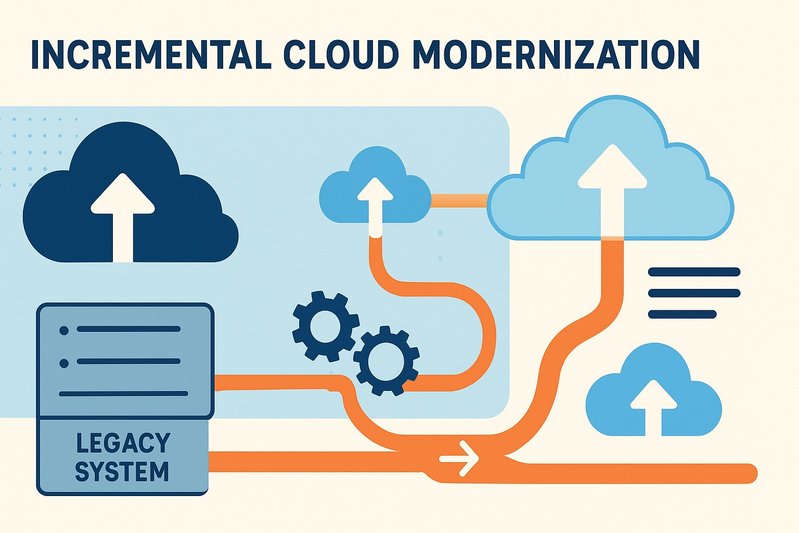
In the fast-evolving world of technology, businesses that cling to outdated infrastructure risk missing out on transformative opportunities that the modern digital landscape offers. Incremental cloud modernization, employing strategies like the strangler fig pattern, feature flags, and parallel-run methods, promises to dynamically balance innovation with stability and drive substantial value by minimizing risks associated with legacy system transformations.
The Core Strategies for Incremental Modernization
1. Embrace the Strangler Fig Pattern
The strangler fig pattern draws inspiration from nature where the fig plant encircles and eventually replaces its host tree. In software modernization, this metaphor guides how new components can gradually take over from legacy systems without a disruptive single cutover. This pattern is particularly effective when deployed at the UI, CDN, or API gateway levels, allowing selective requests to be directed towards new, modern components. A vital part of this approach is the anti-corruption layer, which acts as a buffer translating legacy systems’ data and requests into formats compatible with new architectures.
The strangler fig approach is most effective when organizations strategically phase out components of the legacy application, systematically modernizing functions and reducing dependencies on legacy systems. This reduces complexity and business risk during the transition phase, ensuring business continuity.
2. Leverage Feature Flags
Feature flags serve as a pivotal tool in controlling the behavior of software in real-time, allowing organizations to manage which new features are exposed and to whom. This decouples deployment from user access, providing teams with powerful capability to implement gradual rollouts, A/B testing, and instant rollback options. By segmenting users into cohorts, businesses can engage in detailed and controlled exposure, optimizing performance and user experience based on specific feedback.
Implementations like AWS AppConfig and Azure App Configuration allow businesses to apply these flags across diverse cloud environments seamlessly, managing configurations without traditional release cycles.
3. Parallel-run Strategies
Parallel-run strategies incorporate various testing and deployment techniques that validate new systems without interrupting the current operations. Shadow or dark launches run real-world traffic to new systems invisibly to the end user, ensuring functional parity and performance metrics before enabling broad access. Canary releases introduce a phased traffic ramp to new features or services, safeguarding against systemic failures by enabling measured exposure.
Parallel-run methods can also incorporate blue/green deployments, which maintain two distinct environments for instant rollback if necessary. This approach is valuable when facing strict Service Level Agreements (SLAs), as it offers robust assurance of high availability and minimal disruption.
Decision Criteria for Cloud Adoption
Choosing the right strategy for incremental modernization largely depends on the specific use case and system architecture:
-
UI Modernization: Utilizing strangler figs and feature flags can facilitate gradual improvements and decluttering of old codebases, all while ensuring a consistent user experience.
-
API Modernization: Utilizing strangler fig patterns at the API gateway level enables phased upgrades without loss of functionality, while canary and shadowing tactics offer safety in testing APIs under real-world conditions.
-
Data and Database Migration: Adopt real-time Change Data Capture (CDC) techniques alongside traditional backfill methods to synchronize data across new databases, ensuring minimal downtime and data integrity.
Tools and Platforms Supporting Incremental Modernization
Leading cloud providers offer a host of native tools that simplify and enhance the methodology of incremental modernization:
-
AWS: Provides comprehensive support for canary deployments and blue/green deployments within its API Gateway and database services (AWS Canary Release, RDS Blue/Green).
-
Azure: Supports traffic routing and feature management through services like Azure Front Door and App Configuration (Azure Front Door, Azure App Configuration).
-
Google Cloud: Offers robust deployment and monitoring capabilities with Cloud Deploy and Cloud Run Google Cloud Rollouts, Cloud Deploy Strategies).
Conclusion: Transitioning from Legacy to Modern
Transitioning to modern cloud infrastructure need not be a daunting all-or-nothing endeavor. By adopting an incremental approach facilitated by the strangler fig pattern, feature flags, and parallel-run strategies, organizations can minimize risk while maximizing value. These methods safeguard operations against potential disruptions, thus enabling a smoother and more controlled transition to cloud-native architectures.
Incorporating these strategies with thoughtful planning, robust testing, and the strategic use of contemporary cloud tools positions organizations not just for survival, but for thriving in a digital-first future.
Sources & References
