
FP8 and FP4 Transform Training Economics as Blackwell’s Transformer Engine Matures
Emerging precisions, kernel roadmaps, and model design patterns that will reshape long‑context training
Blackwell’s arrival pushes mainstream GPUs into bandwidth territory once reserved for data center parts. A single workstation card can now deliver up to 1.792 TB/s of GDDR7 bandwidth alongside a second‑generation Transformer Engine, while the professional variant stretches memory to 48–72 GB and adds MIG for partitioned workloads. Against that backdrop, training precision is shifting from a BF16 default toward schedules that exploit FP8 where frameworks allow—and, over time, FP4/FP6 in narrower roles. The prize is straightforward: more tokens per second, larger per‑GPU global batches, and lower memory footprints at longer sequence contexts, without sacrificing convergence.
This piece shows how training economics change as FP8 and FP4 move from hardware capability to software reality. It traces the path from BF16‑first training to FP8‑aware schedules, explains what FP4/FP6 unlock earliest and how to adopt them safely, maps attention‑kernel evolution for 2k–8k sequence lengths, details resource partitioning on workstations with MIG, and outlines the compiler and autotuning pieces that will decide where the gains land. Finally, it lists practical milestones and validation tests to separate credible enablement from marketing slides.
From BF16 default to FP8 schedules powered by a second‑generation Transformer Engine
For the past two years, BF16 mixed precision has been the reliable baseline across consumer and workstation GPUs. That remains true today for robust training across Ada, Hopper, and Blackwell. The strategic change is that transformer‑class workloads increasingly benefit when kernels can move parts of the computation into FP8 via hardware‑assisted recasting.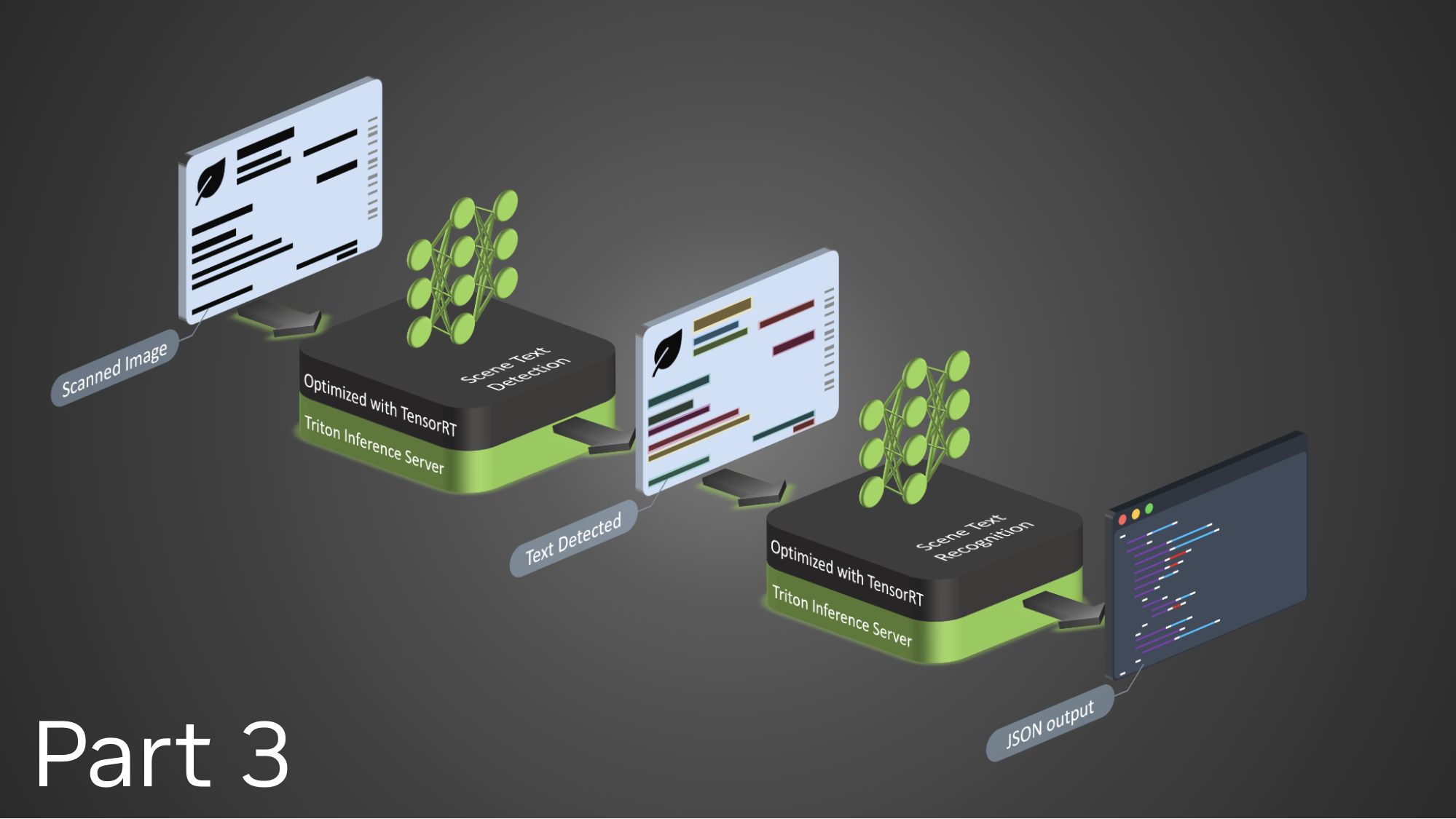
The image illustrates the processing pipeline of NVIDIA Hopper GPUs, featuring a sequence of components including TensorRT-optimized inference servers, scene text detection and recognition modules, and JSON output generation.
Hopper made the FP8 Transformer Engine mainstream for training on SXM nodes and scaled it across NVLink/NVSwitch. NVIDIA’s data center Ada positioning also emphasizes FP8 paths for transformers. Blackwell extends that capability to fifth‑generation Tensor Cores and adds a second‑generation Transformer Engine on both consumer and workstation cards. Hardware supports BF16/FP16/TF32/FP8 out of the box, with FP4/FP6 introduced in Blackwell for even more aggressive memory reduction.
What shifts in practice when FP8 schedules are available?
- Activation and attention memory can drop while throughput rises on FP8‑capable kernels, particularly in memory‑bound phases.
- On long‑context training (2k–8k tokens), FP8 plus modern attention implementations measurably reduces footprint and improves tokens/s, helping keep more of the model off the checkpointing path.
- Perf/W improves in steady state when FP8 kernels run efficiently, a trend established on Hopper and expected to carry over as Blackwell kernels mature.
Enablement is the gating factor. PyTorch 2.6+ builds paired with CUDA 12.8 and cuDNN 9 provide a clean baseline for Blackwell readiness. The decisive step is framework and kernel support: attention, matmul, and layernorm must expose FP8 TE paths and retain convergence. Until those land broadly, BF16 remains the default, with FP8 selectively enabled in well‑tested subgraphs. Early adopters should validate convergence carefully when toggling FP8 on transformers, keep hyperparameters constant, and record time‑to‑target loss alongside tokens/s.
Even before FP8 enablement completes, Blackwell’s raw bandwidth changes the calculus. For example, the GeForce RTX 5090 pairs 32 GB of GDDR7 with 1.792 TB/s, a level that accelerates memory‑bound phases and boosts throughput in transformer‑heavy vision models. The professional Blackwell SKU extends memory to 48 or 72 GB and delivers up to roughly 1.344 TB/s on the 48 GB model, adding both capacity and bandwidth headroom for training.
FP4/FP6: what they unlock first—and a safe path to adoption
FP4 and FP6 arrive with Blackwell’s fifth‑generation Tensor Cores. The promise is clear: halve memory footprint again relative to FP8 for inference and squeeze more capacity‑limited workflows into a single GPU. But training stacks aren’t there yet for general‑purpose FP4. Public toolchains and widely used kernels still rely on BF16/FP16 and FP8 for transformer acceleration where supported.
flowchart TD;
 A[FP4 Adoption] --> B[Inference];
 A --> C[Select Fine-Tuning];
 B --> D["Activation & Weight Memory Reduction"];
 B --> E[Long-context Serving];
 C --> F[Adapter-style Fine-Tunes];
 C --> G[BF16/FP16 ‘Master’ for Stability];
Flowchart illustrating the adoption pathways for FP4 technology in AI workflows, highlighting its applications in inference and fine-tuning.
Where does FP4 make sense first?
- Inference. FP4 is immediately attractive for cutting activation and weight memory in deployment pipelines, especially for long‑context serving where KV caches dominate.
- Select fine‑tuning. Adapter‑style fine‑tunes can be candidates for FP4 on activations or weights in constrained segments, so long as a BF16 or FP16 “master” copy protects optimizer stability.
What’s the prudent path for training adoption?
- Start with BF16 baselines and introduce FP8 where kernels are known‑good; confirm identical data, optimizer, and LR schedules for apples‑to‑apples comparisons.
- For FP4 experiments, keep master weights in BF16/FP16 and apply FP4 where it transparently reduces memory without destabilizing the optimizer. If the toolchain lacks guardrails, treat FP4 as an experimental switch, not a default.
- Track convergence explicitly: tokens/s and steps/s alone can mislead. Measure time‑to‑target loss and validate that final metrics match BF16 baselines.
- Expect mainstream training to rely on BF16 and FP8 TE in the near term, with FP4 creeping into more niches as framework support catches up.
This staged approach preserves training reliability while letting teams bank memory and throughput wins as each precision mode becomes viable.
Attention kernels and the new sequence‑length scaling patterns
As practitioners push beyond 2k contexts, attention memory—not just parameters—dominates the footprint. Attention, activations, and KV caches scale with batch size, sequence length, layers, and hidden size. Modern attention kernels make a decisive difference. FlashAttention‑class implementations reduce attention memory significantly and matter most at 2k, 4k, and 8k contexts.
flowchart TD
 A[Attention Memory] -->|Scales with| B[Batch Size]
 A -->|Scales with| C[Sequence Length]
 A -->|Scales with| D[Layers]
 A -->|Scales with| E[Hidden Size]
 F[Modern Attention Kernels] -->|Reduce Memory| A
 G[Bandwidth Gains] -->|Impact on| F
 G -->|Enhances| H[Token Generation]
 G -->|Enhances| I[Transformer Models]
Flowchart illustrating the scalability factors of attention memory and the impact of modern attention kernels and bandwidth gains on performance.
On Blackwell‑class GPUs, two trends intersect:
- Bandwidth gains compound kernel wins. The RTX 5090’s GDDR7 bandwidth materially speeds memory‑bound phases. Independent testing has already shown that token generation and transformer‑heavy vision models benefit disproportionately from this bandwidth, consistent with the idea that faster memory turns attention and activation bottlenecks into throughput.
- Precision complements kernels. FP8 TE, once broadly available in PyTorch kernels, will trim activation memory further and raise tokens/s at long contexts. Combined with FlashAttention‑2, it offers a path to higher global batches per GPU without spilling into aggressive checkpointing.
Capacity still sets per‑GPU ceilings. In the 24–32 GB class (e.g., RTX 4090, RTX 5000 Ada, RTX 5090), LoRA/QLoRA remains the pragmatic default for 7B/13B fine‑tunes. Full‑parameter 7B at 2k–4k is feasible with checkpointing and sharding; 13B tends to be sharding‑heavy and demands careful accumulation tuning. The 48–72 GB class (RTX 6000 Ada; RTX PRO 5000 Blackwell) is the sweet spot for higher‑context, full‑parameter 13B fine‑tunes, allowing larger per‑GPU global batches and less dependence on deep sharding.
Multi‑GPU adds another dimension. While these workstation and consumer cards lack NVLink, PCIe Gen 5 systems can achieve high data‑parallel efficiency when the software stack is tuned. Recent tests report ~0.91–0.97 efficiency for RTX 5090 on PCIe 5.0, with RTX 6000 Ada platforms also near‑linear in CV training. The caveat: achieved efficiency varies, and PCIe peer‑to‑peer behavior differs across generations—validate topology and NCCL settings before drawing conclusions. For the longest‑context, strong‑scaling LLM training, Hopper SXM nodes with NVLink/NVSwitch still set the pace.
Resource partitioning with MIG: workstations go multi‑tenant
The Blackwell‑based RTX PRO 5000 introduces an important workstation‑class capability: Multi‑Instance GPU (MIG), with up to two instances per GPU. This is not about strong scaling across NVLink. It’s about slicing a single, large‑memory GPU into isolated partitions for multi‑tenant research and development.
The image shows a technical diagram illustrating the processing pipeline of the NVIDIA RTX PRO 5000 GPU, involving steps like image scanning, scene text detection and recognition, optimized with TensorRT, and outputting JSON data.
Why it matters:
- Higher utilization in labs. Teams can run two independent experiments—say, a 7B LoRA fine‑tune and a vision training job—on one GPU without preempting each other. MIG ensures isolation of memory and compute resources.
- Faster iteration cycles. Small‑to‑mid experiments often under‑utilize a 48–72 GB GPU. Partitioning enables concurrency without resorting to fragile manual resource sharing.
- Cleaner baselining. Researchers can pin a reproducible environment per instance and avoid noisy‑neighbor effects when chasing training regressions.
Reality check: MIG doesn’t fix interconnect limits. It’s best used to multiplex independent jobs rather than to split a single large training across instances. And because Blackwell workstation and GeForce cards operate over PCIe, multi‑GPU training still depends on host platform quality (lanes, topology, NUMA) and tuned NCCL collectives for high efficiency. In short, MIG boosts workstation throughput per dollar by enabling concurrency; it doesn’t substitute for NVLink when the task is strong‑scaling at long sequence lengths.
Compiler‑driven autotuning: PyTorch compile, kernel selection, and the Triton question
Compiler‑assisted execution is increasingly core to how training performance is realized on commodity hardware. Two practical levers stand out today:
- PyTorch compile mode. Enabling compile mode has been linked with higher multi‑GPU efficiency on PCIe platforms, especially when combined with AMP and tuned bucket sizes for overlap. It also helps fuse ops in single‑GPU runs to better exploit Tensor Cores.
- Kernel selection. Choosing modern attention kernels (e.g., FlashAttention‑2) and tracking FP8 Transformer Engine enablement per framework release can swing both memory footprint and throughput. With Blackwell in play, attention to CUDA, cuDNN, and NCCL versions becomes more—not less—important.
What about Triton‑level autotuning? While compiler‑driven autotuning is clearly relevant, public, specific details on Triton scheduling for Blackwell‑class FP8/FP4 kernels remain limited. The prudent approach is to ride upstream framework releases, validate kernel paths in logs, and focus on end‑to‑end training metrics rather than microbenchmarks. As more kernels expose FP8 and, later, FP4 in safe configurations, the autotuner’s role should grow—but concrete timelines remain to be proven in public toolchains.
What to watch next: enablement milestones and credible validation tests
The next six to twelve months will determine how quickly FP8 and FP4 reshape training economics on workstations and single‑node rigs. Concrete milestones and tests separate real gains from wishful thinking.
Milestones to track
- Broad FP8 TE enablement in PyTorch kernels for transformers on Blackwell, with release notes that call out supported ops and guardrails.
- Stable driver/CUDA/cuDNN/NCCL combos for Blackwell cards across Linux distributions, with clear compatibility matrices.
- Attention kernel updates optimized for long contexts (2k–8k) that advertise both memory footprint reductions and stable convergence in BF16+FP8 schedules.
- Early, limited FP4 training pathways for adapters or activations, framed as opt‑in with documented convergence behavior.
- MIG tooling maturity on RTX PRO 5000 for clean, reproducible partitioning and monitoring.
Validation tests that matter
- LLM training baselines on Llama‑class 7B/13B at 2k/4k/8k contexts, using BF16 AMP, FlashAttention‑2, and identical optimizers/schedulers. Record tokens/s, steps/s, time‑to‑target loss, peak VRAM, global batch (including accumulation), and GPU‑only power. Compare single‑GPU and 2×/4× runs.
- Vision training references (e.g., ResNet‑50, ViT‑B/16) with fixed hyperparameters, reporting images/s and time‑to‑target accuracy. Expect substantial uplift from Blackwell in transformer‑heavy models.
- SDXL training runs in bf16 with controlled augmentations to measure samples/s and time‑to‑validation loss—explicitly distinguishing training from inference.
- Multi‑GPU scaling tests on PCIe‑only platforms, documenting link speed/width, P2P status, and topology. Tune NCCL channels and overlap; aim for data‑parallel efficiency near 0.9 or better on Gen 5 systems with modern workstation GPUs.
- Power and thermals under steady state. Normalize to GPU‑only power after 10–20 minutes of training at stable temperatures; avoid short‑run “boosty” artifacts.
Hardware selection guidance under the new precision regime
- Choose 32 GB Blackwell (e.g., RTX 5090) when bandwidth‑bound phases and single‑node throughput per dollar dominate, and FP8 enablement is a near‑term priority.
- Choose 48–72 GB Blackwell (RTX PRO 5000) when ECC, larger memory, MIG, and professional driver stability matter—especially for full‑parameter 13B fine‑tunes at longer contexts.
- Reserve Hopper SXM nodes for strong‑scaling pretraining at long contexts, where NVLink/NVSwitch and mature FP8 TE are decisive.
A quick precision‑mode snapshot
| Precision | Hardware support | Training status | Primary benefits | Early caveats |
|---|---|---|---|---|
| BF16 | Ada, Hopper, Blackwell | Default, robust | Stable convergence; broad kernel support | Higher memory than FP8/FP4 |
| FP8 | Hopper TE; Blackwell 2nd‑gen TE | Emerging broadly | Lower memory, higher throughput on transformers | Requires kernel/framework enablement; validate convergence |
| FP4/FP6 | Blackwell 5th‑gen Tensor Cores | Early for training | Halves memory again; compelling for inference | Limited public training support; adopt cautiously |
Conclusion
Precision is becoming a strategic lever, not just a checkbox. BF16 remains the workhorse for reliable training, but FP8 is poised to become a standard part of transformer training schedules on workstations as attention and matmul kernels light up Blackwell’s second‑generation Transformer Engine. FP4/FP6 will follow a narrower path—immediately useful for inference and, over time, for select training segments—once frameworks add the right guardrails. Meanwhile, attention kernels and massive GDDR7 bandwidth rewrite sequence‑length scaling on consumer and professional cards, and MIG turns a single workstation GPU into a multi‑tenant R&D platform. The winners will be teams that couple the right hardware with disciplined measurement and a willingness to adopt new precisions only when convergence is proven.
Key takeaways
- BF16 stays the dependable baseline; FP8 TE will increasingly augment it on transformers as kernels mature.
- FP4/FP6 unlock aggressive memory savings first in inference and adapter‑style fine‑tunes; broader training use is still early.
- FlashAttention‑class kernels plus Blackwell bandwidth drive better scaling at 2k–8k contexts.
- MIG on RTX PRO 5000 enables safe multi‑tenant experimentation without sacrificing isolation.
- Compiler and kernel choices—PyTorch compile, CUDA/cuDNN/NCCL alignment, and attention implementations—decide whether theoretical gains appear in practice.
Next steps for practitioners
- Standardize a BF16 baseline on PyTorch 2.6+ with CUDA 12.8, then selectively validate FP8 paths where available.
- Adopt FlashAttention‑2 for long‑context training; instrument runs for tokens/s and time‑to‑target loss.
- On workstations, evaluate RTX PRO 5000 with MIG for lab concurrency; on single‑node throughput, test RTX 5090 with PCIe Gen 5 hosts.
- Treat FP4 as experimental in training; limit to adapters or activations with BF16 master weights until frameworks harden support.
- Publish steady‑state perf/W and scaling efficiency with full stack details to accelerate community validation.
The next inflection point arrives when mainstream frameworks ship end‑to‑end FP8 transformer paths on Blackwell. When that happens—backed by credible, reproducible convergence and perf/W data—training economics for long‑context models will look very different. 🚀