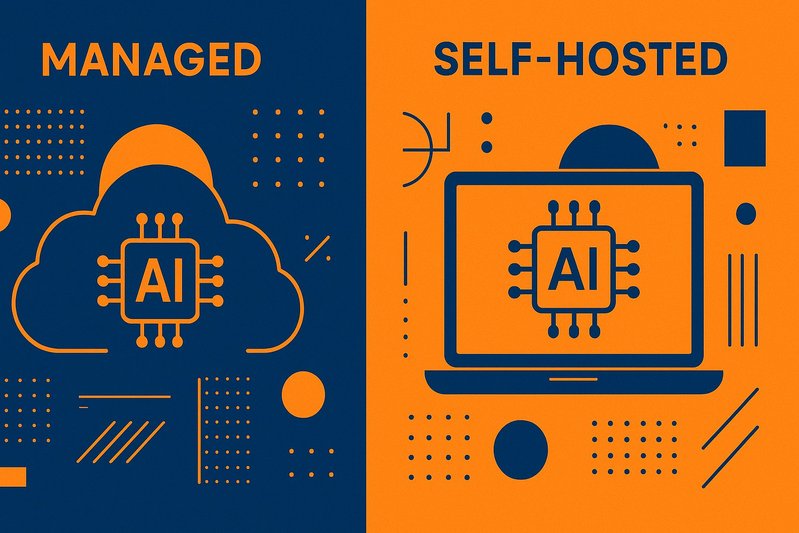
Enterprise Coding AI Splits by Governance: Claude Code’s Managed Path and OpenHands’ Self‑Hosted Autonomy
Procurement, deployment, compliance, and ROI trade‑offs for CIOs, CTOs, and VP Engineering
Two distinct models for AI‑assisted software development are hardening inside enterprises. On one side, a managed, vendor‑supported copilot—exemplified by Claude Code—embeds directly into the IDE, emphasizes long‑context reasoning, and aligns with enterprise governance and procurement patterns. On the other, an open, self‑hosted agent—best represented by OpenHands—runs inside sandboxed environments, edits and executes code, and drafts pull requests with human checkpoints. The choice is not merely philosophical; it drives procurement routes, security reviews, cost structures, and where value actually lands in your SDLC.
This analysis maps the two paths from an executive’s vantage point. It shows how buyer segmentation dictates fit, how deployment and procurement shape time‑to‑value, why governance controls and auditability differ, and how cost models and ROI math diverge. Leaders will see a decision matrix that ties constraints to outcomes, plus case‑style scenarios—regulated bank, SaaS scale‑up, research lab—to pressure‑test strategy.
Market Analysis
Segmentation of buyers and teams
- Regulated enterprises (financial services, healthcare, public sector) prioritize vendor accountability, data‑use guarantees, and regional control. For these teams, Claude Code’s safety‑first, copilot‑style approach delivered via an official VS Code extension, with repository‑aware assistance and apply‑diff workflows, aligns to existing SDLC controls and audit practices. Projects and Artifacts support sustained, inspectable work surfaces and repo grounding inside governed environments.
- Platform and AI enablement groups inside large companies seek flexibility to experiment with autonomous agents, plug in different models, and run in controlled sandboxes. OpenHands, an open‑source “autonomous software engineer” that edits files, runs commands and tests, and drafts PRs in containerized environments, fits these requirements. It is model‑agnostic and supports both local and commercial LLM backends.
- Research labs and innovation teams value autonomy, execution, and reproducibility over vendor‑managed polish. Self‑hosting OpenHands enables rapid iteration, custom toolchains (Editor, Shell, Browser), and end‑to‑end task automation while keeping code inside their own infrastructure when desired.
Deployment models and procurement realities
- Managed platform and cloud channels: Claude Code is available via official IDE integrations and APIs, and Anthropic models are offered through cloud partners such as Amazon Bedrock. This aligns with enterprise procurement, regionality, and VPC‑oriented security postures, and allows organizations to leverage existing cloud governance.
- Self‑hosted and community‑backed: OpenHands runs locally or on servers under an organization’s control, exposes a web UI and CLI, and integrates with Git for branches and draft PRs when credentials are provided. Procurement shifts from vendor seat or token plans to infrastructure provisioning and, optionally, model API contracts chosen by the enterprise.
Data governance and compliance posture
- Managed governance: Claude Code emphasizes strict data‑usage controls, including that customer prompts and outputs are not used to train models by default, plus retention configurability and enterprise deployment options. Projects and the IDE workflow keep humans in control of changes and approvals, while partner cloud deployment can align to regional compliance needs.
- Local control and auditability: OpenHands is Apache‑2.0 licensed and self‑hostable. Pairing it with local models keeps code and prompts entirely inside organizational boundaries. Execution in containers or VMs allows security review of agent behavior and easier reproduction of runs, reinforcing auditability.
Risk profile and accountability
- Vendor‑backed predictability: With Claude Code, organizations get a proprietary product with published pricing and enterprise‑grade controls, and the option to deploy via cloud partners that offer SLAs and support pathways consistent with corporate standards.
- Flexibility with operational responsibility: OpenHands confers deep control and extensibility, but the enterprise owns reliability, uptime, model selection, and support, leveraging the open‑source community and internal platform capabilities.
Comparison snapshot
| Dimension | Managed, vendor‑supported (Claude Code) | Open, self‑hosted agent (OpenHands) |
|---|---|---|
| Interaction paradigm | Copilot inside IDE; human‑in‑the‑loop diffs and Artifacts | Agent executes in sandbox; edits, runs tests, drafts PRs |
| Deployment | Official IDE extension, web app, API; cloud partners like Amazon Bedrock | Local/server hosting; web UI/CLI; pluggable LLM backends |
| Governance | Data‑use restrictions and retention controls; partner‑aligned regionality | Full local control; container isolation; source‑available for audits |
| Procurement | Per‑seat and per‑token pricing under commercial terms | Infra and optional model API costs; Apache‑2.0 license |
| Support | Vendor support and partner SLAs | Community support; internal ops ownership |
ROI & Cost Analysis
Licensing and cost structures
- Claude Code: Enterprises pay per seat for end‑user access and per token for API usage by model tier. This maps cleanly to budget lines for developer tooling and platform consumption, with clear unit economics tied to model selection and context size.
- OpenHands: The software is free under Apache‑2.0. Costs accrue from compute, storage, and the chosen LLM backend (commercial API or locally served open model). The economic lever moves from vendor subscriptions to capacity planning and model‑serving efficiency.
TCO framework
Executives can evaluate total cost of ownership by decomposing into:
-
Access and utilization
-
Managed: Seat utilization (active developers per month), token consumption for long‑context tasks, and API concurrency. Budget predictability improves when usage patterns stabilize across common flows like refactoring and test generation.
-
Self‑hosted: Agent run hours, container density, and model inference cost (tokens or FLOPs) for chosen backends. Utilization depends on how frequently teams trigger autonomous tasks and how often runs iterate through execution loops.
-
Operational overhead
-
Managed: Lower operational burden for runtime and updates; effort centers on enablement, governance configuration, and API integration via Tool Use.
-
Self‑hosted: Higher platform workload—cluster provisioning, security hardening, model upgrades, and monitoring of agent runs.
-
Compliance and audit
-
Managed: Vendor documentation, retention controls, and partner cloud attestations reduce internal audit lift.
-
Self‑hosted: Greater auditability through source access and container logs, balanced by the need to maintain those controls.
-
Opportunity cost
-
Managed: Faster time‑to‑productivity for broad developer bases through IDE‑native workflows.
-
Self‑hosted: Higher potential upside for automation of end‑to‑end tasks and internal customization, but with longer setup and process integration cycles.
Specific metrics unavailable, but the structure above enables apples‑to‑apples evaluations using each organization’s own developer counts, workload profiles, security mandates, and model choices.
Measuring ROI in development outcomes
- Claude Code value capture concentrates on day‑to‑day IDE assistance: faster comprehension of complex code, multi‑file refactoring via diffs, test and doc generation, repo‑aware Q&A via Projects, and AI‑aided code reviews. Benefits accrue broadly across all contributors with minimal workflow disruption.
- OpenHands concentrates value in automation of end‑to‑end tasks with verification loops: plan, edit, run, validate, and draft PRs in a sandbox, then route to human checkpoints. The ROI hinges on converting well‑scoped issues into repeatable agent runs and capturing batch wins (e.g., systematic refactors, test synthesis at scale).
Use Cases & Case Studies
Use‑case portfolio
-
Claude Code (managed copilot)
-
Repo‑aware code explanation and navigation inside VS Code
-
Suggested multi‑file diffs applied under developer control
-
Test scaffolding and documentation drafts
-
PR descriptions and review comments grounded in Projects and workspace context
-
API‑level automations via Tool Use for controlled external actions
-
OpenHands (self‑hosted agent)
-
Multi‑file edits with execution feedback from unit tests or linters in a sandbox
-
Command runs, browsing for external information when permitted, and iterative verification
-
Branching and draft PR creation with artifacts and logs for traceability
-
Model‑agnostic backends enabling local or commercial LLMs
Case‑style scenarios
-
Regulated bank
-
Constraints: Strict data‑use policies, regional residency, and internal audit requirements. Operational risk tolerance is low; procurement prefers established vendor channels.
-
Likely path: Standardize on Claude Code for IDE‑centric assistance with retention controls and deployment via a cloud partner aligned to regional and VPC requirements. Use Projects to ground on regulated codebases and Artifacts to keep outputs inspectable. Limited, controlled pilots of OpenHands may run in isolated sandboxes for R&D, but production developer workflows prioritize the managed path.
-
SaaS scale‑up
-
Constraints: Speed and differentiation, with a platform team comfortable owning infrastructure. Data sensitivity is moderate; maximizing engineering throughput is paramount.
-
Likely path: Hybrid. Roll out Claude Code broadly to elevate day‑to‑day productivity and quality in the IDE while using OpenHands in CI‑adjacent sandboxes for batch refactors, test generation, and PR drafting on specific repos. Select LLM backends per repository sensitivity and latency needs; consolidate learnings into coding standards and automation policies.
-
Research lab
-
Constraints: Need for autonomy, local control, and bespoke workflows; willingness to experiment with multiple models.
-
Likely path: Anchor on OpenHands for execution‑centric workflows with local model serving where data must never leave the premises. Adopt Claude Code selectively—e.g., for researchers who prefer an IDE copilot experience—while keeping code changes gated by rigorous human review.
Decision Matrix
The decision converges on governance, control, and where you want accountability to sit. ⚖️ Use this matrix to align constraints with the dominant approach:
| Primary constraint/goal | Managed copilot (Claude Code) | Self‑hosted agent (OpenHands) |
|---|---|---|
| Compliance posture demands vendor attestations, retention controls, and regional alignment | Strong fit: data‑use guarantees, seat/API contracts, partner cloud deployment | Possible with local models, but governance burden sits with you |
| Need fastest time‑to‑productivity across a broad developer base | Strong fit: IDE‑native workflows, apply‑diff edits, minimal change management | Requires enablement for agent runs, repo wiring, and sandbox ops |
| Desire to automate end‑to‑end tasks with execution and verification | Supported via APIs and controlled Tool Use, but not default | First‑class: plan‑edit‑execute‑validate loops and PR drafting |
| Preference for open extensibility and model pluggability | API extensibility, controlled tool invocation | Source‑level extensibility; custom tools, backends, and workflows |
| Budget model | Per seat + per token; predictable unit economics | Infra + model costs; variable but controllable via hosting strategy |
Adoption playbooks in large organizations
- Stakeholder alignment: Bring together security, platform, and application leaders. Clarify where human‑in‑the‑loop is mandatory versus where sandboxed autonomy is acceptable.
- Security and compliance reviews: For Claude Code, document data‑use settings, retention policies, and regional/partner deployment choices. For OpenHands, review container isolation, model data flows, and repository permissions.
- Change management: Train developers on IDE copilot behaviors (diff‑first, review‑centric). For agent workflows, set explicit human checkpoints, logging standards, and rollback procedures.
- Evaluation and rollout: Pilot both paths on the same repositories to measure developer experience and outcome quality. Use SWE‑bench‑style tasks for agentic trials where feasible; for IDE assistance, emphasize repo‑grounded queries and multi‑file refactors representative of daily work.
Conclusion
Enterprises no longer face a monolithic choice on coding AI. A managed copilot and a self‑hosted agent reflect two credible routes that can coexist. Claude Code offers governed, predictable assistance embedded in the IDE, backed by vendor controls and cloud partner deployments that align with procurement and compliance. OpenHands offers autonomy, execution, and source‑level extensibility under your own roof, translating into powerful, verifiable automation—if you are ready to own the platform responsibilities.
Key takeaways:
- Managed versus self‑hosted is fundamentally a governance decision that cascades into procurement, ops, and ROI.
- Claude Code captures broad, everyday productivity in the IDE with retention controls and partner‑aligned deployments.
- OpenHands enables end‑to‑end task automation with verification in sandboxed environments and model choice.
- Hybrid strategies often win: copilot for everyone, agents for targeted, high‑leverage workflows.
Next steps:
- Map constraints: regulatory, data locality, and support expectations.
- Run parallel pilots on the same repos: IDE copilot flows versus agentic runs.
- Instrument cost and outcomes: seat and token budgets versus infra and model costs; measure quality deltas on PRs and test coverage where applicable.
- Decide deployment channels early—cloud partner or self‑hosted—so security and procurement can run in parallel with technical trials.
The split will likely persist: a trusted, managed copilot for the many; an autonomous, self‑hosted agent for the few high‑leverage workflows that warrant deep automation. The winners will be organizations that master both and route the right work to each path at the right time.
Sources & References
