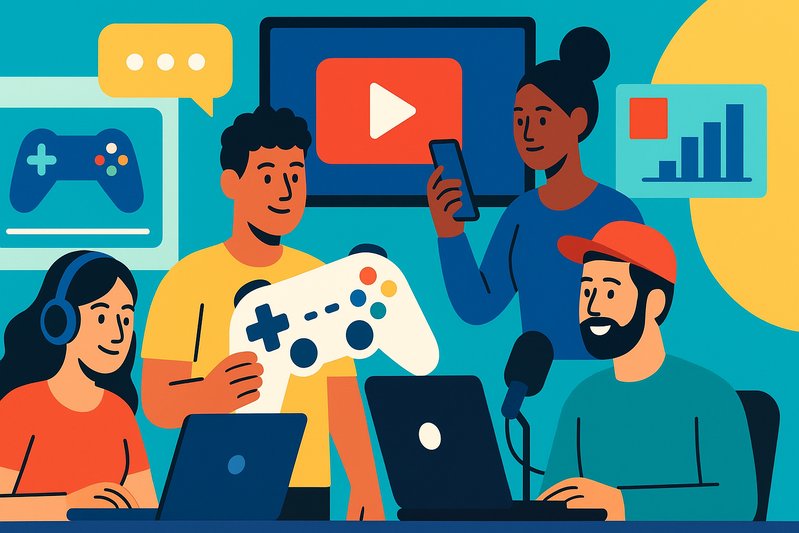
Empowerment through Technology: Tools and Platforms Paving the Way for Content Creators
Unveiling the Toolkit Empowering Creators to Redefine Digital Entertainment
In the realm of digital content creation, technology often serves as the cornerstone of innovation and expression. This is particularly true for game content creators, for whom a myriad of platforms and tools are shaping the ever-evolving landscape. These digital artisans are empowered by cutting-edge technologies in game streaming and cloud gaming, which allow them to redefine what we understand as digital entertainment.
The Dual Engines: Live Game Streaming vs. Cloud Gaming
The game streaming ecosystem bifurcates into two primary architectures—live game streaming and cloud gaming. While both share the goal of delivering engaging content, they differ fundamentally in execution and purpose. Live game streaming, which involves broadcasting gameplay to audiences, relies on sophisticated technology stacks from creation tools to distribution networks such as CDNs. Cloud gaming, on the other hand, focuses on interactive gameplay rendered on cloud servers, streamed back to players, requiring low-latency performance and immediate feedback.
The technological underpinnings of these two approaches involve the use of software frameworks like OBS Studio for broadcasting, which offers tools like scene graphs and hardware encoder support to handle tasks from video capture to streaming [1]. Comprehensive coding solutions, such as FFmpeg and GStreamer, work in tandem to handle complex media processing tasks across platforms, thus empowering creators with the flexibility to tailor their streaming setups to their specific needs [2][3].
Leading Technologies: Encoding and Broadcast Efficiency
A pivotal element that powers both live streaming and cloud gaming is the efficiency of encoding and decoding technologies. The advance of codecs like AVC and HEVC has set industry standards for live streaming, but the rapid adoption of the AV1 codec marks a new era with significant bitrate savings and improved quality. Supported by major GPU manufacturers like NVIDIA, AV1’s adoption is increasingly prevalent across various platforms, including WebRTC environments, due to its capability of delivering high-quality streams at reduced bandwidth costs [4][6]. These developments reflect a trend toward more sustainable and cost-effective content delivery.
Hardware solutions form a critical part of this ecosystem. NVIDIA’s Video Codec SDK, along with AMD’s Advanced Media Framework (AMF) and Intel’s oneVPL, provides powerful tools for hardware encoding and decoding, enabling smooth real-time gameplay experiences [6][7][8]. The use of such advanced technologies ensures that creators can deliver high-fidelity content across a range of devices from desktops to smart TVs.
Platforms Playing Their Part: Tools for the Modern Creator
Major platforms like Twitch, YouTube, and Facebook Gaming serve not just as outlets for creators but as innovative ecosystems where live game streaming thrives. These platforms provide robust APIs, interactive features, and community engagement tools that enhance both viewer and creator experience. Twitch continues to lead with its integration of low-latency modes and interactive extensions, which keep audiences engaged and involved [50][51].
The monetization capabilities on these platforms are equally noteworthy. Offering options from subscriptions and ad revenue to donations and sponsorship deals, these platforms give creators multiple streams of income, tailoring their channels to optimize earnings and audience engagement.
A Look Forward: Innovation and Trends from 2024–2026
The coming years promise continued advancements in both live streaming and cloud gaming. Real-time AV1, expected to gain traction as hardware support expands, will be pivotal in delivering higher quality streams. Similarly, the proliferation of edge computing and GPU clouds, which provide powerful resources closer to the end user, will spearhead a new age of ultra-low latency, real-time interaction [28][31].
Additionally, the progress in AI-assisted production tools—such as NVIDIA Maxine’s AI effects, which enhance video quality through super-resolution and denoising—ushers in a higher caliber of content with reduced bandwidth needs [78]. This convergence of artificial intelligence into production workflows empowers creators to deliver professional-grade content without significant overhead.
Conclusion: Navigating the Future of Content Creation
Today’s game creators are equipped with a robust toolkit of technologies that enable unparalleled creativity and engagement. From hardware and codecs tailored for efficiency to platform-specific innovations enhancing community interaction, creators are more empowered than ever to craft experiences previously unimaginable.
As we progress toward 2026, the synergy between live streaming and cloud gaming, bolstered by technological advancements and platform innovations, will shape the future of digital content. These developments promise not just an expanded narrative for entertainment but a more inclusive and engaging experience for audiences worldwide.
Sources & References
