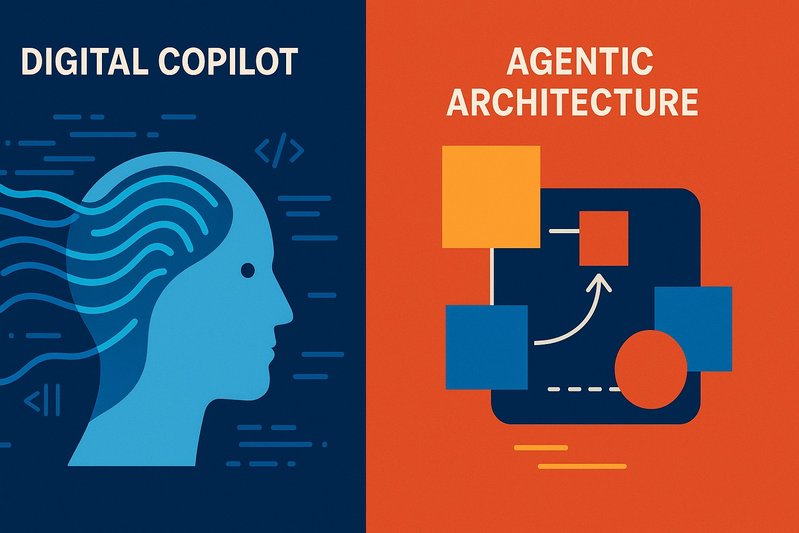
Copilot and Agentic Architectures Diverge: Claude Code’s Long‑Context Grounding versus OpenHands’ Execution Loop
A deep technical comparison of repository grounding, toolchains, verification, and performance envelopes across two contrasting systems
Two sharply different patterns for computer‑assisted development have crystallized: the copilot that reasons over a large working context and proposes safe, reviewable changes, and the agent that edits, executes, and verifies inside a controlled runtime. Claude Code embodies the former with long‑context reasoning, repository‑aware grounding through Projects, and an apply‑diff workflow inside the IDE. OpenHands (formerly OpenDevin) exemplifies the latter with first‑class Editor, Shell, and Browser tools driving multi‑file edits and command execution in sandboxed environments.
This divergence matters because it defines system boundaries, verification guarantees, and operational responsibilities. One approach anchors itself to IDE ergonomics, human review, and managed model capabilities; the other elevates execution as a first‑class primitive, making validation loops and model choice part of the deployer’s remit. This article maps the two architectures across context handling, tool invocation, change mechanics, verification paths, performance envelopes, and benchmarking implications.
Readers will learn how Claude Code grounds models on large codebases via Projects and Artifacts, why OpenHands treats execution as its core loop, and how verification, collaboration, and security differ as a result. The analysis closes with best‑practice guidance for selecting, combining, and evaluating these systems in real repositories.
Architecture and Implementation Details
System roles and boundaries
- Claude Code positions itself as an assistive, copilot‑style workflow delivered through an official VS Code extension and web experience. It provides inline chat, repository‑aware reasoning, and suggested diffs that developers apply explicitly. The system offers Tool Use through an API for structured function calling, but default user interaction remains human‑in‑the‑loop.
- OpenHands takes an agentic stance. It exposes an Editor for multi‑file modifications, a Shell for running commands and tests, and a Browser for external information gathering. These tools operate in containerized or sandboxed environments where the agent plans, edits, executes, and iterates.
The boundary line is clear: Claude Code avoids autonomous execution by default and centers on IDE‑mediated edits and guidance; OpenHands elevates execution as a core capability and assumes iterative action under a runtime the system controls.
Grounding the model on a codebase
- Claude Code leans on long‑context inputs and repository grounding via Projects. Projects organize repositories and related documents, creating continuity and improved retrieval across sessions. Inside the web app, Artifacts act as persistent, visible working surfaces for code and structured outputs. Together, Projects and Artifacts create a transparent, inspectable memory: developers see the model’s working state rather than inferring it.
- OpenHands maintains internal working state and file mapping as the agent edits and runs code. Context is accumulated not only in tokens but also in artifacts of execution—file diffs, command outputs, and test results inside the sandbox—informing subsequent actions.
Both systems aim to keep the model “on the rails” of the repository. Claude relies on retrieval‑style grounding plus visible artifacts; OpenHands relies on tool outputs and internal state built through execution.
Toolchains and action models
- Claude Code’s API offers structured Tool Use that lets integrators define controlled functions the model can call. In practice, the VS Code experience or the web app with Artifacts remains the primary interaction surface, and edits are proposed as diffs for human approval.
- OpenHands treats Editor, Shell, and Browser as first‑class tools. The agent composes these tools to implement plans: modify files, run tests and commands, consult the web when enabled, and repeat until criteria are satisfied or review is requested.
Claude’s toolchain is shaped by governance and IDE ergonomics; OpenHands’ toolchain is designed for autonomy and composability inside a sandbox.
Change application mechanics
- Claude Code presents changes as suggested diffs. The developer reviews and applies them, maintaining a clear audit trail and ensuring changes land only with explicit human consent.
- OpenHands performs multi‑file edits directly within its sandbox, often on a dedicated branch. With configured credentials, it can commit changes and open draft PRs as part of the agent run, leaving comprehensive logs and artifacts of the process.
This difference underpins two distinct user experiences: a suggestion‑and‑apply UX in the IDE versus an agent editing and preparing a PR in a controlled runtime.
Execution, Verification, and Collaboration
Verification pathways
- Claude Code emphasizes human review and guided iteration. The assistant helps generate tests, explain failures, and sketch fixes, but execution typically remains under developer control (in the IDE, terminal, or CI). Tool Use can integrate controlled actions programmatically, yet the default workflow prioritizes safety and oversight.
- OpenHands embraces test‑driven, command‑driven iteration. The agent runs linters, unit tests, or other commands, inspects outputs, and refines edits. Validation is enforced by actual program execution, reducing reliance on purely predictive reasoning and enabling closed‑loop correction inside the sandbox.
The verification story follows naturally from architecture: Claude Code prioritizes human gating; OpenHands prioritizes autonomous loops that culminate in human approval steps.
Collaboration primitives at the system level
- Claude Code assists within existing Git workflows. It drafts PR descriptions, generates review comments, and proposes commit messages, while Projects keep cross‑session grounding intact. Collaboration remains centered on human‑owned branches and reviews.
- OpenHands automates collaboration primitives. It can create branches, commit changes, and open draft PRs as outputs of an agent task. These actions presume human review before merge but streamline preparation by packaging diffs, logs, and rationale from the agent run.
Both systems drive toward improved collaboration, but Claude operates as a reviewer/authoring copilot; OpenHands acts as a developer workstation under agent control that hands you a ready‑to‑review PR.
Security, Model Strategy, and Performance Envelopes
Security and execution containment
- Claude Code runs inside well‑understood enterprise boundaries. Data usage options and retention controls are documented, and organizations can deploy via cloud partners such as Amazon Bedrock to align with regional, networking, and compliance requirements. Execution is governed by the developer’s environment; the assistant does not routinely execute commands autonomously.
- OpenHands is self‑hostable and open‑source (Apache‑2.0). It isolates execution in containers or VMs, aiding reproducibility and limiting side effects. When paired with local models, code and prompts remain on internal infrastructure; when paired with commercial APIs, data handling follows the chosen provider’s policies.
In practice, Claude emphasizes vendor‑managed governance and IDE‑side control; OpenHands emphasizes inspectable, containerized operation and deployment‑owner control.
Model strategy and configuration responsibility
- Claude Code is powered by Claude 3‑series models such as Claude 3.5 Sonnet, emphasizing coding and reasoning quality and supporting long‑context inputs. Projects and attachments provide retrieval‑style grounding, and Artifacts expose a visible working memory in the web app. Performance and latency depend on model tier and context size, with enterprise SLAs available through the platform and partner channels.
- OpenHands is model‑agnostic. The deployer selects a backend—commercial APIs or self‑hosted open models—determining context length, latency, and reliability. The system’s quality envelope thus hinges on model selection and configuration, plus how the tool loop is tuned for the target codebase.
The trade‑off is straightforward: Claude offers managed models with integrated grounding primitives; OpenHands offers flexibility at the cost of configuration responsibility.
Performance and scalability considerations
- Claude Code leverages long context to reason over substantial repositories when grounded via Projects and workspace visibility. This enables multi‑file refactors and repo‑aware Q&A without custom runtime orchestration. Specific end‑to‑end metrics are unavailable here, but latency and throughput typically scale with chosen model tier and prompt/context size.
- OpenHands scales by distributing agent runs into sandboxed environments that can be replicated and audited. Performance depends on the model backend and the cost of executing commands and tests in the container. Again, specific metrics are unavailable; throughput and latency hinge on infrastructure, model choice, and the complexity of the task loop.
In short, Claude trades orchestration complexity for long‑context reasoning and retrieval; OpenHands trades token‑heavy context for verifiable execution cycles and reproducible sandboxes.
Benchmarking and Evaluation Implications
Public evaluation cultures differ across the two approaches:
- Claude Code is typically assessed on private repositories where Projects and workspace grounding capture domain‑specific context and developer workflows. These trials are repo‑specific and often not directly comparable across organizations. Specific metrics unavailable.
- OpenHands and its predecessor OpenDevin are routinely evaluated on SWE‑bench and SWE‑bench Verified, which measure an agent’s ability to plan changes, edit code, and validate outcomes across real repositories. Results vary depending on the LLM backend and tool configuration. Specific comparable metrics unavailable here.
For apples‑to‑apples decisions, teams should run both systems against their own repos and CI practices. Claude’s strengths appear when Projects and Artifacts are used to sustain context and expose working surfaces; OpenHands’ strengths emerge when agent loops are allowed to run tests and iterate inside a sandbox with clear human approval gates.
Comparison Tables
Architectural contrasts
| Dimension | Claude Code | OpenHands |
|---|---|---|
| Core role | Copilot‑style assistant; human‑in‑the‑loop edits | Agentic developer; executes, validates, and iterates |
| Repo grounding | Long‑context inputs, Projects retrieval, visible Artifacts | Internal agent state, tool outputs (Editor/Shell/Browser) in sandbox |
| Tooling model | Structured Tool Use API; IDE‑centric diff proposals | First‑class Editor/Shell/Browser; autonomous tool composition |
| Change mechanics | Suggested diffs; apply in IDE | Multi‑file edits in sandbox; branch + draft PR automation |
| Verification | Human review gating; optional controlled tool calls | Test‑driven and command‑driven loops with feedback |
| Execution | Developer‑owned environment; no default autonomous commands | Containerized runtime isolation with program execution |
| Model posture | Managed Claude 3‑series, long‑context, retrieval | Model‑agnostic; deployer selects backend |
Operational implications
| Area | Claude Code | OpenHands |
|---|---|---|
| Collaboration | Draft PR text, review comments, commit messages | Branch creation, commits, draft PRs |
| Security/Governance | Enterprise controls; partner deployment options | Self‑hostable; container isolation; Apache‑2.0 |
| Performance view | Latency/throughput shaped by model tier + context; metrics vary | Latency/throughput shaped by backend + sandbox execution; metrics vary |
| Benchmarking | Repo‑specific trials; private evaluations | SWE‑bench/Verified agentic evaluations; backend‑dependent |
Best Practices 🔧
- Start with clear boundaries: use Claude Code for IDE‑centric assistance and reviewable diffs; use OpenHands when you need an execution loop that runs tests and commands in isolation.
- Ground effectively: enable Claude Projects to sustain repository context across sessions and monitor Artifacts as a visible working surface; configure OpenHands’ Editor/Shell/Browser tools to mirror your CI/test regimen.
- Gate merges: regardless of system, keep human approval steps before production merges. For OpenHands, require draft PRs and logs from the sandbox run; for Claude, maintain diff reviews and targeted test runs.
- Choose models deliberately: with Claude, select the appropriate 3‑series tier aligned to context size and latency expectations; with OpenHands, evaluate several LLM backends under your infrastructure to balance privacy, speed, and reliability.
- Evaluate on your repos: reproduce tasks from your backlog in both systems, capturing time‑to‑completion, defect rates, and reviewer effort. Public benchmarks provide a baseline for agentic systems, but your codebase and workflows are decisive.
Conclusion
Two philosophies now define the frontier of AI‑assisted development. Claude Code optimizes for trustworthy, repo‑aware assistance with transparent working surfaces, suggested diffs, and governed tool invocation. OpenHands optimizes for autonomy through execution: it edits, runs, validates, and presents draft PRs from within reproducible sandboxes. The practical consequence is not merely stylistic; it determines how you ground context, where verification lives, who owns model configuration, and how you scale.
Key takeaways:
- Claude Code: long‑context grounding via Projects and Artifacts; suggested diffs; human review first.
- OpenHands: Editor/Shell/Browser toolchain; sandboxed execution and test‑driven loops; draft PR automation.
- Security posture differs: IDE‑side governance versus containerized isolation under your control.
- Performance depends on model and context (Claude) versus model and runtime loop (OpenHands); specific metrics unavailable.
- Benchmarking cultures diverge: repo‑specific trials versus public SWE‑bench/Verified.
Next steps: pilot both systems against representative tasks in your repository, wire Claude Projects and Artifacts for deep grounding, and configure OpenHands’ sandbox and toolchain to mirror your CI. Enforce strict review gates either way. Looking ahead, expect convergence in hybrid workflows: a governed copilot for day‑to‑day iteration augmented by agentic runs in sandboxes for batch refactors and test‑driven changes—each evaluated where it performs best. 🚀
Sources & References
