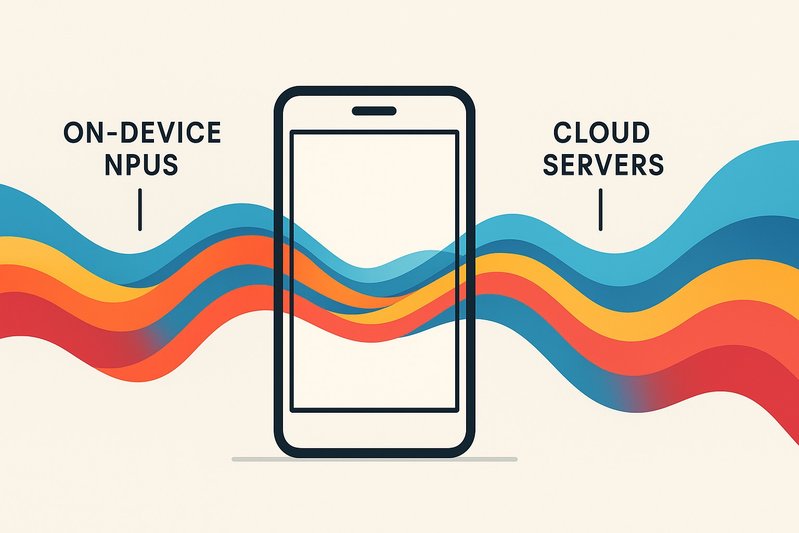
Attested Offload and On‑Device NPUs Redefine Smartphone AI Latency and Trust in 2026
Smartphones have crossed a threshold: the most transformative AI experiences now hinge on what runs locally on the handset and how seamlessly heavier work is offloaded with privacy guarantees. Two milestones underscore the shift. First, Apple established a clear template for attested offload with Private Cloud Compute (PCC), ensuring that when on‑device resources aren’t enough, tasks can escalate to verifiably secure servers. Second, flagship Android devices began shipping with credible on‑device generative capability—exemplified by Meta Llama 3‑8B summarization running locally on Asus’s Zenfone 12 Ultra—making offline, low‑latency writing and media tools a default expectation. As camera/video pipelines adopt real‑time semantic operators and live translation/summarization become “always available,” the control plane that routes work between NPU, GPU, DSP, and offload is now a core system feature, not an implementation detail.
This article traces how hybrid AI architectures are implemented across leading flagships; how privacy posture (attested offload vs local‑first guarantees) is shaping trust; and how camera/video, live communication, and writing tools are being re‑engineered as real‑time systems under thermal and battery constraints. Readers will learn how execution stacks keep NPUs fed, how to interpret vendor performance disclosures and MLPerf Mobile, why integration patterns that remove steps matter, and which failure‑mode protections distinguish resilient AI features from fragile demos.
Why hybrid matters now: the control plane that routes tasks between handset NPUs and secure offload
The “hybrid” era is not merely about combining local and cloud models; it’s about a deterministic control plane that chooses the right execution venue with explicit guarantees.
flowchart TD;
 A[On-device Execution] -->|if capability available| B{Decision};
 B -->|Energy Constraints| C[Cloud Execution];
 B -->|Performance Satisfaction| D[Continue On-device];
 C --> E[Secure Offload with Attestation];
 D --> F[Return Results];
 E --> F;
Flowchart illustrating the hybrid control plane decision-making process for task routing between on-device execution and secure offload to the cloud, highlighting the conditions under which tasks switch between these modes.
-
Apple’s approach sets the benchmark for attested offload. AI tasks run on‑device first; when capability or energy constraints demand escalation, PCC processes data in a hardened environment built on Apple silicon, with cryptographic attestation and transparent policies. This bridges performance and privacy without exposing personal data to generic cloud infrastructure.
-
Google’s Gemini strategy on Android couples on‑device capability with Gemini Nano for flows such as Recorder summaries and smart replies on Pixel 8 Pro. Heavier camera/video and generative tasks can invoke cloud models, with prompts and settings clarifying when network or account data is involved.
-
Samsung’s Galaxy AI provides broad cross‑app assistance—including Circle to Search and Live Translate—and exposes on‑device modes where feasible. Built atop the Knox security platform, Samsung frames routing decisions with enterprise‑grade device attestation and policy controls.
-
Asus emphasizes a local‑first posture for its own tools on Zenfone 12 Ultra, enabling AI summarization, document capture, and transcription without network dependency, with optional cloud escalation for heavy generation. ROG’s gaming‑centric features likewise prefer on‑device compute for responsiveness and predictability.
This control plane reduces latency by avoiding round‑trips, protects privacy by defaulting to device execution, and keeps success rates high under poor connectivity. The hybrid line is now explicit: not “cloud unless otherwise stated,” but “on‑device unless a secure, attested offload is demonstrably required.”
Execution stacks on modern flagships: NPU, GPU, DSP and the schedulers that keep them fed
Under the hood, execution aligns workloads with the most efficient accelerator:
-
The NPU handles dense transformer inference, speech models, and semantic image operators at favorable performance‑per‑watt. Modern mobile platforms (e.g., Snapdragon 8 Gen 3 and Dimensity 9300) elevate NPU throughput while exposing efficient operator libraries to the OS.
-
The GPU complements vision‑centric tasks and mixed workloads that benefit from wide SIMD and high memory bandwidth—useful for certain image generation/edit operators when NPU kernels are unavailable or when vector graphics and compositing dominate.
-
The DSP tackles audio pipelines and low‑latency signal processing, anchoring live translation and noise cancellation loops alongside keyword spotting and wake‑word latency requirements.
Schedulers arbitrate across these engines, balancing thermals and QoS. Industry benchmarks like MLPerf Mobile show steady generation‑over‑generation gains in on‑device inference latency and throughput, enabling tasks that previously required cloud offload to run interactively on the handset. Vendor TOPS disclosures signal raw headroom, but end‑user perception depends on operator availability, memory bandwidth, and the OS’s ability to prefetch, batch, or shard tasks across accelerators. Specific cross‑device metrics are unavailable here, but qualitative results are clear: still‑image edits, summaries, and translation feel instantaneous on 2024–2025 silicon; long generative video remains taxing and often routes to the cloud.
A practical view of placement decisions:
| Workload | Typical placement (2024–2026 flagships) | Rationale |
|---|---|---|
| Text summarization | On‑device NPU | Low latency, privacy, manageable memory footprint (e.g., compact LLMs) |
| Live translation/transcription | On‑device NPU + DSP | Tight latency loops; offline reliability; avoids jitter |
| Semantic still‑image edits | On‑device NPU/GPU | Efficient operators on NPU; GPU for compositing |
| Generative video transforms | Cloud offload when available | Energy‑intensive; larger models; consistent throughput |
| Semantic camera capture (recognition, tracking) | On‑device NPU/ISP handshake | Real‑time constraints tied to shutter/preview cadence |
Privacy architecture as a systems feature: attested offload versus local‑first guarantees
Trust is now a systems design choice, not a settings panel.
flowchart TD
 A[Privacy Architecture] --> B[Attested Offload]
 A --> C[Enterprise-Anchored Device Trust]
 A --> D[Local-First Guarantees]
 B --> E["Apple's PCC"]
 C --> F["Samsung's Knox"]
 D --> G[Asus AI Tools]
 E --> H["Auditable, Limited-Purpose"]
 F --> I[Hardware-Backed Attestation]
 G --> J[Device Execution for Zenfone and ROG]
This diagram illustrates the privacy architecture components, showcasing the relationships between ‘Attested Offload’, ‘Enterprise-Anchored Device Trust’, and ‘Local-First Guarantees’, including specific implementations and their key features.
-
Attested offload: Apple’s PCC treats off‑device inference as an extension of the secure enclave mindset—auditable, limited‑purpose, and cryptographically provable. Users gain richer model capacity without surrendering raw personal data to general cloud stacks.
-
Enterprise‑anchored device trust: Samsung’s Knox provides hardware‑backed attestation, policy controls, and isolation that frame Galaxy AI as acceptable for privacy‑sensitive and BYOD scenarios. The platform’s on‑device modes (e.g., for Live Translate) let organizations and users contain data.
-
Local‑first guarantees: Asus prioritizes device execution for its own AI tools on Zenfone and ROG to decouple user success from network and third‑party cloud policies. This addresses common failure modes—timeouts, degraded hotel Wi‑Fi, congested stadiums—by eliminating the network dependency entirely for core tasks.
-
Hybrid with explicit consent: Google emphasizes clarity, surfacing prompts and controls when heavier camera/video experiences invoke cloud processing. This transparency demystifies routing and supports informed consent.
The trade‑offs are straightforward: attested offload expands capability and preserves privacy at the infrastructure level; local‑first avoids offload entirely for many daily tasks; enterprise‑grade device posture carries weight in regulated environments; and transparency during hybrid routing builds user confidence.
Camera and video AI as real‑time systems: ISP handshakes, semantic operators, and thermal constraints
Camera and video have become the proving grounds for on‑device AI as real‑time systems. The architecture marries the ISP’s deterministic pipeline with NPU‑and GPU‑accelerated semantic operators, under hard latency budgets tied to preview FPS, shutter response, and rolling burst capture.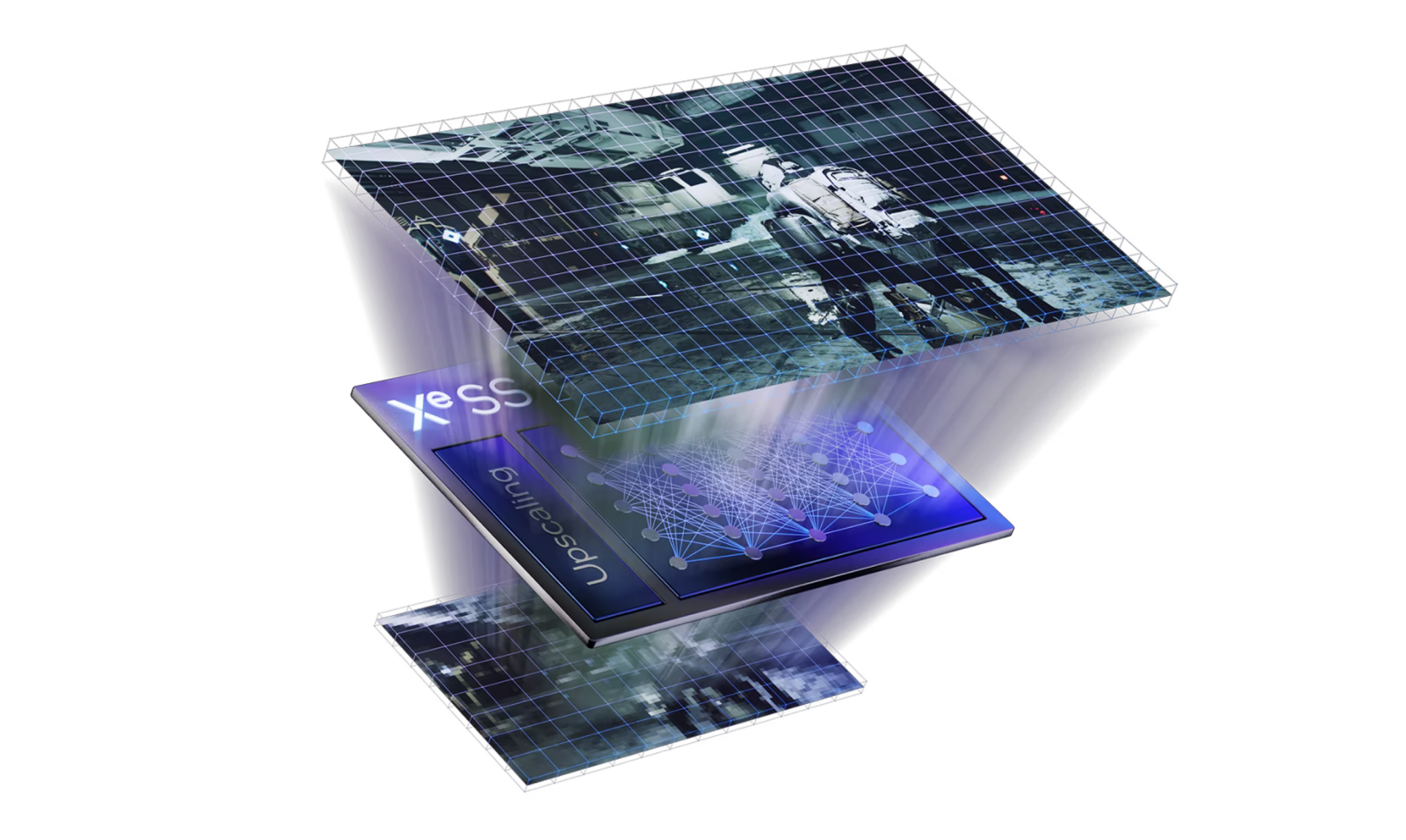
The image illustrates a digital representation of a Google Pixel camera’s advanced image processing capabilities, featuring layered neural network diagrams and a 3D grid of photo data.
-
Google’s Pixel pipeline remains a touchstone, pairing device‑side semantics with cloud‑accelerated edits like Magic Editor and Video Boost where model size and energy demand justify offload. Users see low latency during capture and richer transformations after upload.
-
Samsung’s Galaxy AI pushes cross‑app utility but also advances in camera semantics, including Generative Edit that slots into a familiar gallery workflow. On‑device modes and clear controls help users keep edits local when they choose.
-
Xiaomi’s 14 Ultra emphasizes an AI‑enhanced computational pipeline and pro‑grade tuning, while HyperOS’s system scheduling aligns camera tasks with accelerator availability to preserve responsiveness.
-
Asus splits personas: Zenfone 12 Ultra leans into creator workflows—AI Magic Fill, Unblur, AI Tracking, and Portrait Video 2.0—anchored by local processing; ROG Phone’s X Capture and related tools focus on live recognition and automated capture during gameplay.
Thermals govern what’s sustainable. ASUS’s ROG thermal design (GameCool 9) and accessories support longer steady‑state performance, maintaining consistent NPU/ISP throughput over extended sessions. Specific thermal metrics and duty cycles are unavailable, but the direction is clear: sustained camera/video AI requires heat spreaders, airflow (where accessories allow), and scheduler discipline to avoid ISP stalls, focus lag, or frame drops.
Live communication loops: low‑latency speech, translation, and inline summarization
Real‑time communication is where latency and trust are felt most acutely.
-
Samsung’s Live Translate works across phone and in‑person conversations, presenting an archetype of low‑latency bidirectional translation with on‑device options to contain data.
-
Google’s Recorder on Pixel completes on‑device summaries in seconds for typical recordings, showing how compact models and efficient audio pipelines lift reliability offline.
-
Asus contributes AI Call Translator 2.0, AI Transcript 2.0, and on‑device article/document summarization via Llama 3‑8B on Zenfone 12 Ultra, enabling travel‑proof assistance without network dependency.
-
Systemwide writing tools on iPhone tie inline summarization and rewrite directly to apps, minimizing app hops and friction.
The net effect is fewer steps, faster turnarounds, and meaningful privacy gains. Instead of juggling apps and waiting on server queues, users tap once, speak once, and get results consistently—even on a plane or subway.
Model choices and memory footprints on device
Compact models are the enablers. Shipping on‑device summarization via an 8‑billion‑parameter LLM demonstrates that meaningful generative capability now fits within flagship constraints when paired with efficient operator libraries. Specific memory footprints, quantization strategies, and context window sizes are not disclosed in the materials cited here. The practical guidance remains:
- Prefer compact models for default, offline‑first paths.
- Reserve larger models for attested offload when quality gains are material.
- Use OS‑provided operator libraries to minimize power and avoid duplicating kernels across vendors.
Latency, throughput, and energy: reading MLPerf Mobile and TOPS
Performance claims need translation. MLPerf Mobile provides a cross‑device view of latency and throughput trends for representative workloads, documenting steady progress that underwrites today’s on‑device experiences. Vendor TOPS numbers hint at ceiling capacity, but they seldom map linearly to real apps. What matters:
- Operator coverage: Are the kernels you need optimized on the NPU?
- Memory bandwidth and scheduling: Can the system feed the accelerator without stalls?
- Thermal governance: Will the device sustain performance for the entire task?
DXOMARK battery evaluations complement these views by showing how endurance shifts under mixed use, including camera and communication loads. Concrete cross‑vendor metrics vary by device and test, and specific figures are unavailable here. Nonetheless, the direction is consistent: text and still‑image workloads now have predictable, modest energy costs on modern silicon; long generative video remains better suited to offload.
Thermal sustainability: throttling behavior, cooling solutions, and NPU duty cycles
Thermals are the hidden constraint behind “it was fast once.” Sustained AI requires: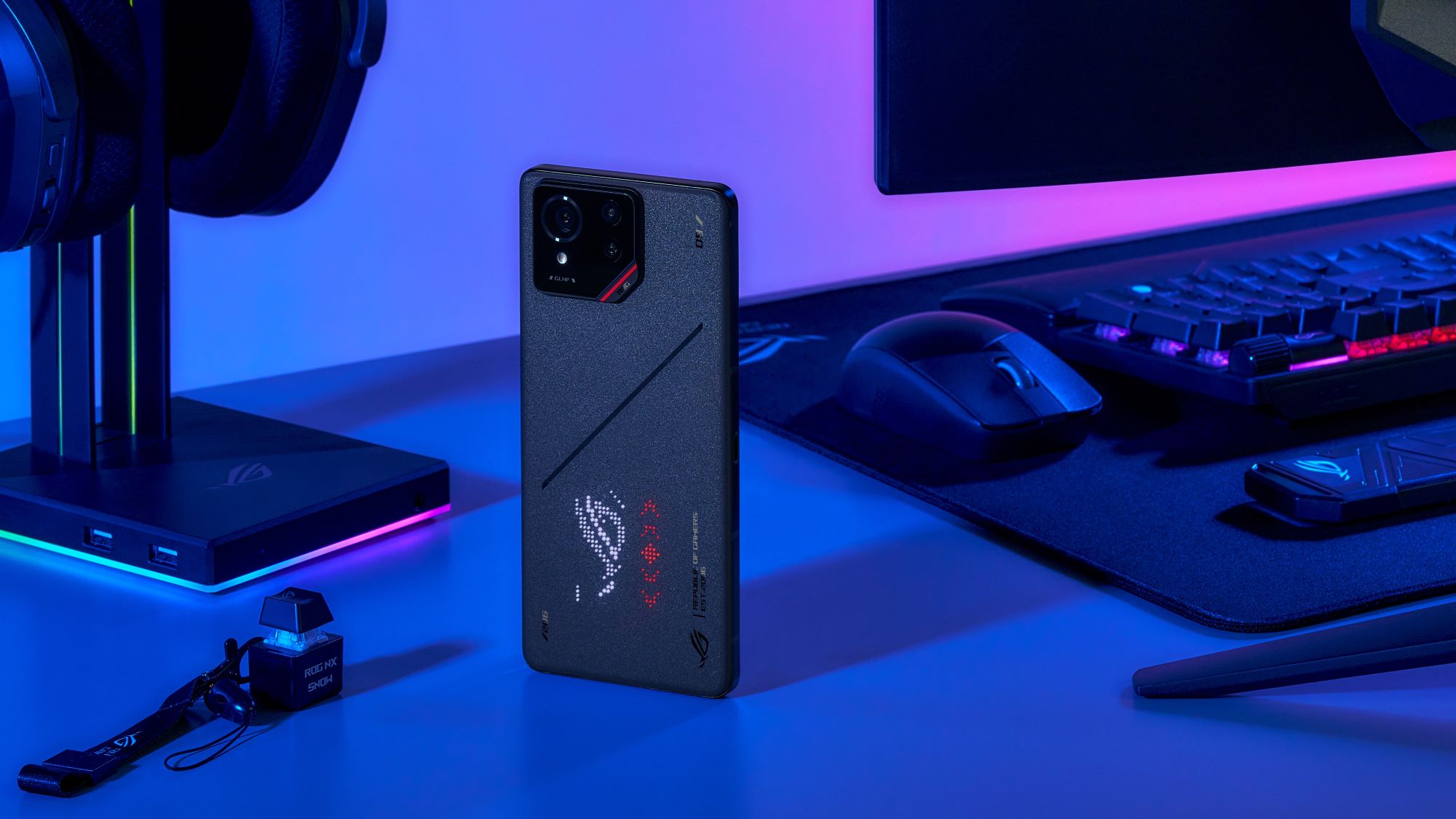
Two ASUS ROG Phone 9 devices are displayed on a dark surface, with illuminated ROG logo lights in a dimly lit environment.
- Efficient accelerators with strong perf/W for steady‑state inference.
- Hardware cooling and chassis designs that distribute heat during long sessions.
- Scheduler strategies that spread bursts across NPU/GPU/DSP without starving the ISP or audio stacks.
Gaming‑forward devices like ROG Phone 9 lean into advanced cooling (GameCool 9) and accessory ecosystems that indirectly lift AI reliability by preventing early throttling. Camera‑heavy workflows benefit from predictable thermal envelopes that keep focus, exposure, and semantic operators synchronized. Specific throttling thresholds and NPU duty cycles vary by device and are not disclosed here; the pattern is nonetheless clear: the best AI experiences are the ones that remain consistent at the 20‑minute mark, not just in the first 20 seconds.
Integration patterns that remove steps
Users reward systems that collapse steps and keep them in flow:
- iPhone’s systemwide writing tools run inline, turning “open app → copy → paste → edit” into a single gesture.
- Galaxy AI’s Circle to Search and Live Translate operate from any screen, reducing context switches and decision fatigue.
- Pixel’s on‑device Recorder summaries finish locally, compressing the path from capture to usable notes.
- Zenfone’s on‑device summarization and document tools cut network variability out of common workflows, while ROG’s in‑game overlays meet users in the moment of play.
These patterns increase discoverability (they’re in default apps and gestures), raise success rates (no dependency on signal quality), and build trust (clear privacy posture at the point of use).
Failure modes and graceful degradation
Hybrid systems should fail well:
- Offline reliability: Local‑first implementations for voice and text decouple success from network and server load.
- Explicit offload: When escalation is necessary, attested infrastructure (e.g., PCC) preserves privacy guarantees and predictability.
- User clarity: Prompts and toggles around cloud use prevent surprises and meet enterprise policy needs.
- Timeouts and fallbacks: If a heavy feature would degrade foreground performance or battery, queue it for offload or offer a lighter local pass.
The baseline expectation in 2026 is no “AI failed” banners during travel, congested events, or spotty Wi‑Fi. Systems that meet this bar win trust.
Comparison tables
Hybrid AI posture and trust signals across leading flagships
| Platform | On‑device scope (examples) | Offload model | Visible trust signals | Integration highlights |
|---|---|---|---|---|
| iPhone (iOS 18) | Systemwide writing tools, image features | Private Cloud Compute with attestation | On‑device‑first; audited offload | Inline tools; context‑aware Siri |
| Google Pixel (Gemini Nano) | Recorder summaries, smart replies | Cloud for heavier edits (e.g., some video) | Prompts/settings clarify routing | Assistant suggestions across apps |
| Samsung Galaxy (Galaxy AI) | Live Translate modes, cross‑app utilities | Hybrid with user controls | Knox platform and policies | Circle to Search; Note/Transcript Assist |
| Asus Zenfone 12 Ultra | On‑device Llama 3‑8B summarization; local tools | Optional cloud for heavy gen | Local‑first stance | Embedded in Asus apps |
| Asus ROG Phone 9 | In‑game recognition/capture and comms AI | Predominantly local | Latency‑biased local execution | Overlays tuned for play |
| Xiaomi 14 Ultra (HyperOS) | AI‑enhanced camera pipeline | Regional cloud + local | Regional compliance posture | Pro‑grade camera options |
| Oppo Find X (ColorOS) | AI eraser/edit; transcription/summarization | Hybrid with partners | Varies by market | OS‑level integrations |
Task placement and degradation behavior
| Task | Default placement | Fallback when constrained | User‑visible behavior |
|---|---|---|---|
| Inline writing tools | On‑device | PCC‑style offload or cloud, where available | Same UI; privacy indicator or prompt |
| Live translation | On‑device | Reduced quality or pause for network | Maintains call flow; prompts on offload |
| Camera generative edits | On‑device for light ops | Defer to cloud pipeline | Progress indicator; consistent result |
| Long video transforms | Cloud | Queue or notify | Battery preserved; predictable ETA |
Conclusion
Hybrid AI has matured into a system architecture with user‑visible consequences. On‑device NPUs handle the everyday loop—summaries, translation, semantic edits—delivering stable latency, offline reliability, and lower energy variance. Attested offload extends reach for heavier tasks without breaking privacy promises. Camera and video pipelines increasingly behave like real‑time operating systems, coordinating the ISP with semantic operators under thermal limits. Meanwhile, integration that removes steps—inline writing, from‑any‑screen gestures, in‑game overlays—turns AI from a demo into a habit. The leaders don’t merely add features; they engineer control planes, trust signals, and fallback paths that keep experiences predictable.
Key takeaways:
- On‑device‑first is now the default for premium experiences; offload must be attested or clearly consented.
- Scheduler discipline and thermal design are as important as raw TOPS for sustained AI quality.
- Camera/video AI is a real‑time system; keeping ISP, NPU, and GPU in sync is non‑negotiable.
- Integration into default apps and gestures is the fastest route to reliability and adoption.
- Benchmarks are directional; operator coverage and thermal steadiness determine perceived speed.
Actionable next steps:
- Audit each AI feature for an offline path and define explicit escalation rules.
- Surface privacy posture at the point of use; prefer on‑device toggles and clear prompts.
- Optimize operator coverage on the NPU and validate sustained performance under thermal load.
- Build failure budgets: timeouts, queues, and lightweight fallbacks that preserve user flow.
- Align camera/video semantics with ISP cadence; measure end‑to‑end latency, not just kernel timings. 🚀
Forward look: As compact models improve and OS operator libraries expand, more of the assistant layer will run locally with predictable energy costs. Offload will remain essential for heavy media and long‑context generation, but only when backed by attestation and transparent UX. The winners in 2026 are designing for that balance now.